
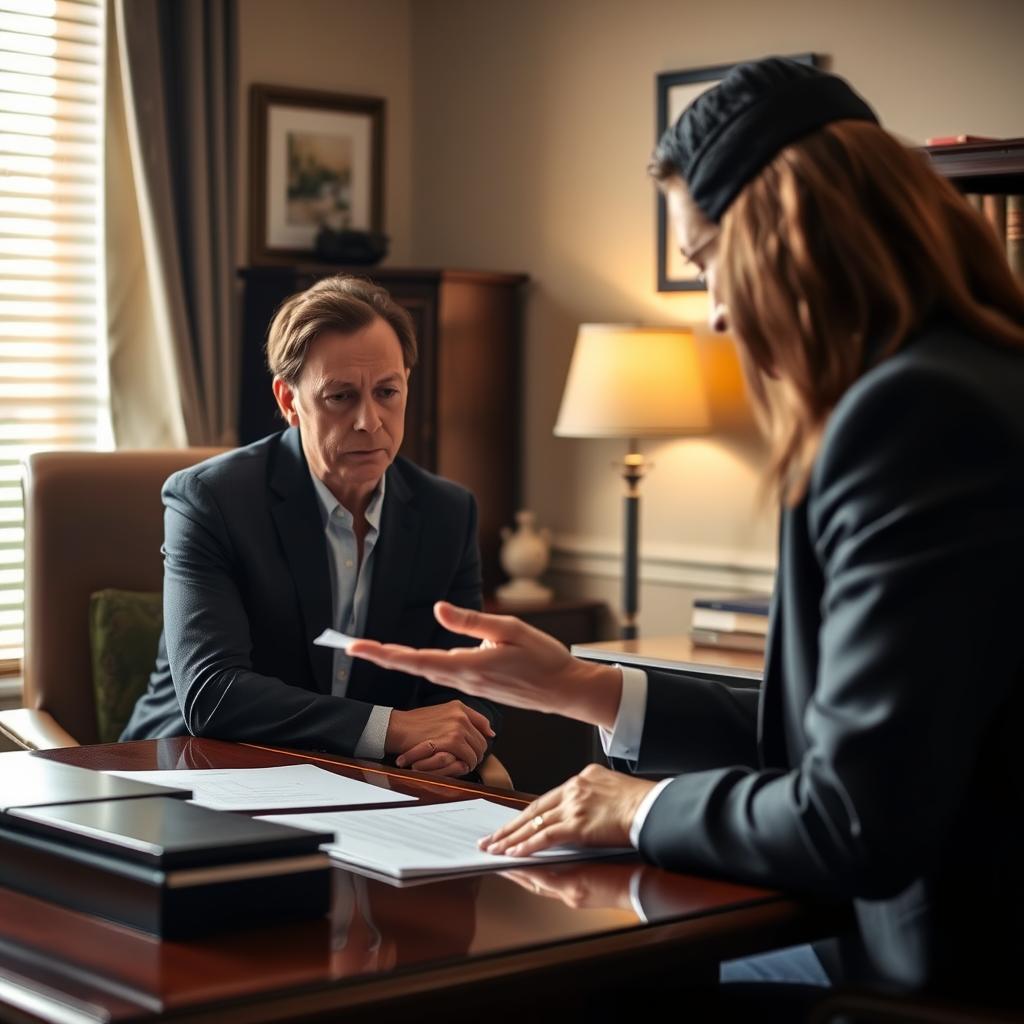
Supervised Visitation Lawyer Louisa County, VA
Your court order now says you can only see your child under the watch of a third party. Maybe it’s a grandparent, maybe a social worker at a visitation center — but the feeling is the same. You are being treated as a potential danger to your own child, and you do not know what to do next. In Louisa County, Virginia, a judge can impose supervised visitation when there are concerns about a parent’s fitness, safety, or ability to follow court orders. The consequences can keep you from the everyday parenting moments that matter most, and fighting the restriction alone can be overwhelming. Mr. Sris and his Of Counsel team at Law Offices Of SRIS, P.C. represent parents in Louisa County whose visitation rights are at stake. Reach the firm at (888) 437-7747. Law Offices Of SRIS, P.C. — Advocacy Without Borders.
Strategy Options for a Supervised Visitation Case
When a supervised visitation order is on the table, your first move matters. A common mistake is to react emotionally rather than build a record. Mr. Sris and his Of Counsel focus on three strategic paths, depending on where your case stands. If the order has not yet been entered, the goal is to present evidence that supervision is unnecessary — perhaps by showing that the parent has completed anger management, substance abuse counseling, or parenting classes, or that the allegations triggering the concern are unfounded. If a temporary order is already in place, the strategy shifts to demonstrating consistent, safe, and positive visits so that the court can be asked to modify the restriction at a review hearing. And if the supervised arrangement stems from a final order of the Louisa County Juvenile and Domestic Relations District Court, the team will evaluate whether there has been a material change in circumstances — a legal standard that must be met before the court can revisit the order. Every path requires careful preparation, because the parents who succeed are the ones who show the court tangible, documented progress.
What to Expect at Louisa County Courts
In Louisa County, supervised visitation matters are heard at the Louisa County Juvenile and Domestic Relations District Court, located at 100 West Main Street, Louisa, Virginia. The court is part of the Sixteenth Judicial District and follows Virginia Code § 20-124.3, which requires judges to consider the best interests of the child — looking at factors like the child’s relationship with each parent, any history of family abuse, and each parent’s willingness to support the child’s relationship with the other parent. If the case is part of a broader divorce, it may also be heard in the Louisa County Circuit Court, which handles divorce and equitable distribution. Virginia is an equitable distribution state, not a community property state, so property issues that arise alongside custody and visitation are decided based on what is fair, not a rigid 50-50 split.
Court appearances in supervised visitation cases are not one-time events. The judge may schedule multiple review hearings to see whether the parent has followed the court’s directives. Parents are often expected to show proof of compliance — certificates from parenting programs, letters from counselors, or logs from scheduled visits. The process can be slow, and outcome depends heavily on the specific facts presented.
Understanding the Court’s Options
If the court determines supervised visitation is warranted, it is not a permanent punishment — it is a finding that, under current circumstances, unsupervised time poses a risk. The court may order visits supervised by a family member, by a professional supervisor, or at a designated visitation center. A judge might impose conditions: no alcohol consumption before visits, completion of a psychological evaluation, or proof of stable housing. Failure to follow the conditions can result in further restriction. If a parent habitually misses scheduled supervised visits, the court may treat that as abandonment and shift physical custody to the other parent. On the other hand, a parent who complies fully with the supervised arrangement often sees the restriction lifted over time.
The relevant statutes — particularly Va. Code § 20-124.2 and § 20-124.3 — give the court wide latitude to craft orders that fit the child’s best interests. Because the judge has that flexibility, parents benefit from presenting a clear, organized, and verifiable record of their circumstances and efforts.
About Mr. Sris and His Of Counsel Team
Mr. Sris, Owner and Founder of Law Offices Of SRIS, P.C., founded the firm in 1997. A former prosecutor, he now concentrates his practice on family law and represents parents in Louisa County supervised visitation proceedings. Mr. Sris and his Of Counsel bring over 120 years of combined legal experience with 4,739+ documented firm-wide results. Results may vary. The team understands both sides of the courtroom: Mr. Sris testified before the Virginia House Courts of Justice Committee in support of 2019 HB 635 (chief patron Del. David Bulova), a bill that revised the state’s equitable distribution statute. His Of Counsel add depth in areas including family law, custody disputes, and local court procedure.
For a comprehensive legal analysis of supervised visitation under Virginia law, visit our main site.
Frequently Asked Questions
How does a Virginia lawyer defend against a supervised visitation order?
A Virginia lawyer challenges allegations that supervision is necessary by testing the evidence, examining whether the court followed proper procedure, and presenting mitigating facts. Under Va. Code § 20-124.3, the judge must find that unsupervised time would endanger the child. An experienced attorney can show the parent’s changed circumstances—such as completed classes or stable living arrangements—to argue against continued supervision. Strategies vary, but the common thread is building a factual record that rebuts the concerns that gave rise to the order.
What should I do if I am facing supervised visitation in Louisa County?
If a supervised visitation motion has been filed, do not ignore it. Contact a family law attorney who can review the petition and advise you. Gather any evidence that shows your fitness as a parent: records of counseling, employment verification, letters from family members, and logs of recent contact with the child. Avoid violating any existing court orders, because a single violation can be used against you. Prompt action matters; the court’s timeline depends on its calendar, so early preparation is critical.
Can a supervised visitation order be modified later?
Yes. Virginia courts can modify visitation when there has been a material change in circumstances since the last order, and when the modification serves the child’s best interests. Parents who have consistently complied with the supervised visits—and who can show improved stability or decreased risk—often succeed in getting the supervision requirement lifted. The process requires filing a motion with the Louisa County Juvenile and Domestic Relations District Court and presenting evidence at a hearing.
What are the grounds for supervised visitation in Virginia?
A court may order supervised visitation if it finds that unsupervised time would endanger the child’s physical or emotional health. Common grounds include substance abuse, domestic violence, mental health concerns, a history of neglect, or a prior pattern of failing to exercise visitation responsibly. The judge evaluates each case using the trusted-interests factors in Va. Code § 20-124.3, and the order must be tailored to the specific risks identified.
Do I need a lawyer for a supervised visitation case in Louisa County?
You are not legally required to have an attorney, but supervised visitation proceedings involve serious rights. The other parent may be represented, and court procedures can be complex. An attorney can gather evidence, cross-examine witnesses, and argue for the least restrictive arrangement. In Louisa County, the Juvenile and Domestic Relations District Court expects pro se litigants to follow the same rules as attorneys, so having counsel helps ensure your position is properly presented.
Outbound sources: Virginia Code Title 20 (Domestic Relations) · Virginia Courts
Attorney advertising. Prior results do not guarantee a similar outcome. Results may vary. Law Offices Of SRIS, P.C. · 4008 Williamsburg Court, Fairfax, VA 22032 · (888) 437-7747 · Richmond Location serves Louisa County clients; by appointment only.
Case results depend on a variety of factors unique to each case.