
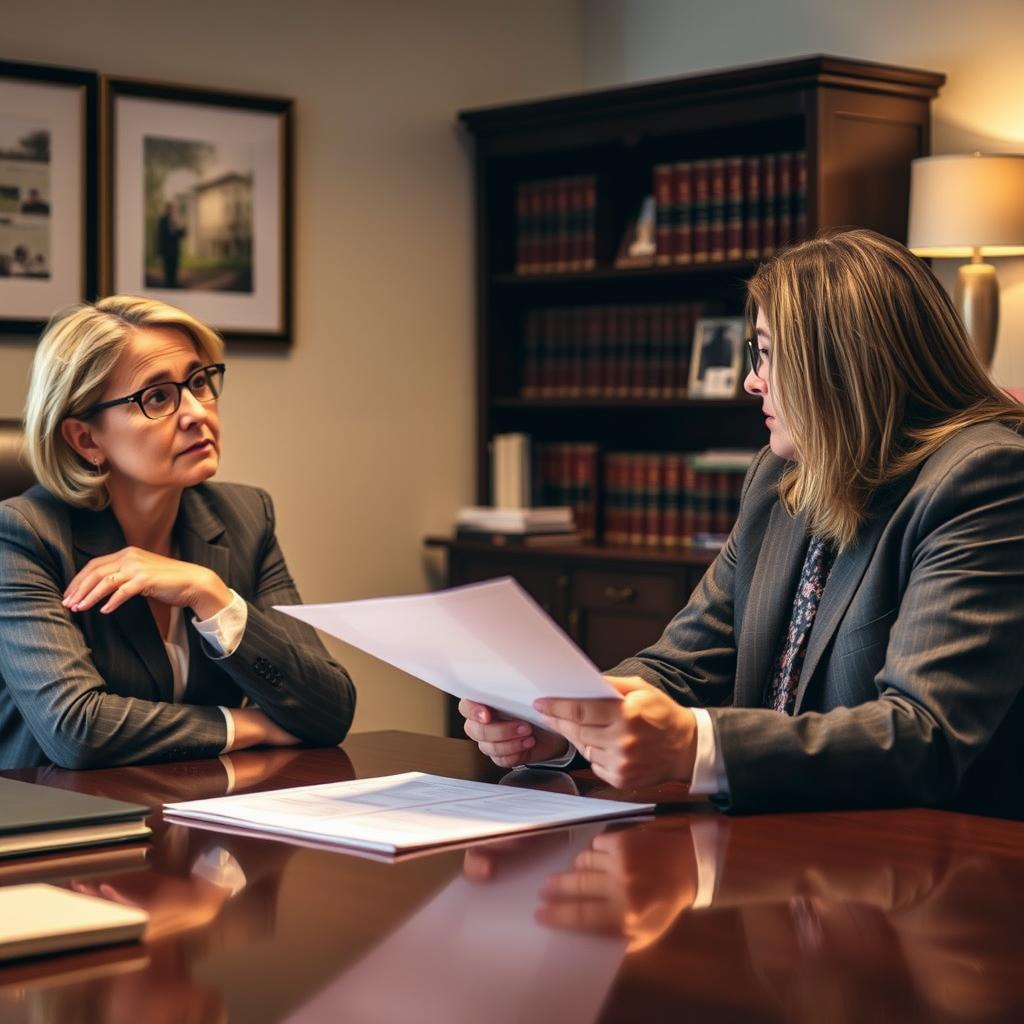
Rehabilitative Alimony Lawyer Fauquier County, VA
You worked hard to reach a fair resolution in your Fauquier County divorce, and now the question of rehabilitative alimony is before you. Whether you believe you need temporary support to complete a degree or professional training, or you are being asked to pay support while your former spouse gets back on their feet, the outcome affects your financial future. Our firm represents clients across Fauquier County—including Warrenton, New Baltimore, Bealeton, Marshall, and The Plains—in these sensitive matters. Mr. Sris and his Of Counsel team bring over 120 years of combined legal experience (backed by 4,739+ documented firm-wide results) to each case, and our local familiarity with Fauquier County courts helps you understand what to expect. Results may vary. To discuss how rehabilitative alimony applies to your situation, call Law Offices Of SRIS, P.C. at (888) 437-7747. Law Offices Of SRIS, P.C. — Advocacy Without Borders.
How Mr. Sris Approaches Rehabilitative Alimony in Fauquier County
Rehabilitative alimony is a form of spousal support designed to help a divorcing spouse gain the education or training needed to enter or re‑enter the workforce and become self‑sufficient. In Virginia, a court awards this type of support after considering the 13 factors listed in Va. Code § 20‑107.1, including each party’s earning capacity, the duration of the marriage, contributions to the family, and the standard of living established during the marriage. Our approach is to present a clear, fact‑based picture of both spouses’ circumstances so the Fauquier County Circuit Court can make an informed decision.
Because Fauquier County is part of the Twentieth Judicial District, cases involving rehabilitative alimony—whether attached to a divorce, a modification of an existing support order, or an enforcement proceeding—are heard at the Fauquier County Circuit Court at 6 Court Street, Warrenton, VA 20186. The court has broad discretion, and its ruling can shape your finances for years. Mr. Sris builds each case with attention to the practical realities of your life: the cost of education or training, the time it will take to complete a program, and the efforts you have already made to become self‑supporting.
What to Expect When You Raise a Rehabilitative Alimony Issue
Every rehabilitative alimony matter begins with a review of your financial history, your employment capacity, and the specific plan you or the other party puts forward. The goal of Virginia law is to provide support for a defined period—not to maintain a permanent transfer of income. Mr. Sris and his team gather documentary evidence, including income records, educational transcripts, job‑market data, and any training‑program enrollment materials. If the other side is requesting rehabilitative alimony, we scrutinize the reasonableness of the request and the feasibility of the proposed plan.
The court typically schedules a hearing after the necessary pleadings and discovery are complete. Although the timeline varies depending on the court’s calendar and the complexity of the issues, you can expect that the judge will focus on the specific factors set out in the statute. We prepare you for the process so you understand what evidence is relevant and how the court is likely to weigh it. Throughout the proceeding, we keep you informed and work to find a resolution that ends the financial entanglement without unnecessary delay.
Understanding the Legal Framework Without Getting Bogged Down in Numbers
Virginia’s rehabilitative alimony law is structured to encourage independence. The court does not use a mathematical formula; instead, it weighs the 13 statutory factors together. A supported spouse must present a concrete plan for education or training, and the paying spouse’s ability to provide support while meeting their own obligations is a central consideration. The court also examines whether the supported spouse made reasonable efforts toward self‑sufficiency during the marriage and whether a job market exists for the skills they intend to acquire.
Because these cases turn heavily on the specific facts, it is essential to present your situation honestly and persuasively. Mr. Sris’s experience in family law matters across Virginia—including regular appearances in Fauquier County—enables him to frame your position in a way the court will take seriously. If your circumstances change after an award is entered, you or the other party may seek a modification, but the party seeking the change must show a material change in circumstances. We handle those proceedings as well.
About Mr. Sris and His Of Counsel Team
Mr. Sris, Owner and Founder of Law Offices Of SRIS, P.C., has concentrated his practice on family law for more than two decades. He founded the firm in 1997 and is admitted in Virginia, Maryland, the District of Columbia, New Jersey, and New York. His Of Counsel team brings additional depth, drawing on over 120 years of combined legal experience (backed by 4,739+ documented firm-wide results). Results may vary. Together, they serve clients throughout Northern Virginia, including Fauquier County, and they are routinely present at the Fauquier County Circuit Court.
Frequently Asked Questions About Rehabilitative Alimony in Fauquier County
What is rehabilitative alimony in Virginia?
Rehabilitative alimony is temporary spousal support awarded to help a divorcing spouse gain the education, training, or work experience necessary to achieve financial self‑sufficiency. Unlike permanent support, it is intended to cover a specific period while the recipient completes a defined plan. The court decides the amount and duration after evaluating the 13 factors in Va. Code Ann. § 20-107.1.
How does a Fauquier County court decide whether to award rehabilitative alimony?
The judge examines each party’s income, earning capacity, the standard of living during the marriage, the duration of the marriage, contributions to the family (including homemaking), and the recipient’s plan for re‑entering the workforce. The court also looks at the payor’s ability to support the recipient while meeting their own expenses. The decision is always fact‑specific, and the party requesting support must show the need and a concrete plan.
Can rehabilitative alimony be modified after it is ordered?
Yes. If a material change in circumstances occurs—for example, the supported spouse completes training earlier than expected, or the paying spouse loses their job—either party can petition the Fauquier County Circuit Court for a modification. The court will not automatically adjust the award; the party seeking the change must present evidence that the original terms are no longer appropriate.
Do I need a lawyer for a rehabilitative alimony case in Fauquier County?
You are not required by law to have counsel, but rehabilitative alimony disputes involve detailed financial evidence and statutory factors that are challenging to navigate alone. An attorney can help you assemble the necessary records, frame your position, and present your case effectively. Because the judge has wide discretion, having an experienced family‑law practitioner on your side can make a significant difference in the outcome.
How long does a rehabilitative alimony case typically take in Fauquier County?
The timeline varies depending on whether the issue is part of an initial divorce or a post‑divorce proceeding, the complexity of the financial evidence, and the court’s calendar. Once all evidence is gathered and the matter is scheduled for a hearing, the court will issue a ruling after hearing the testimony and arguments. It is best to speak with an attorney about what to expect in your particular situation.
Related family law services in nearby counties:
Family Law Lawyer Fairfax County, VA ·
Family Law Lawyer Prince William County, VA ·
Family Law Lawyer Stafford County, VA ·
Family Law Lawyer Loudoun County, VA
Attorney advertising. Prior results do not guarantee a similar outcome.
Case results depend on a variety of factors unique to each case.
Results may vary.