
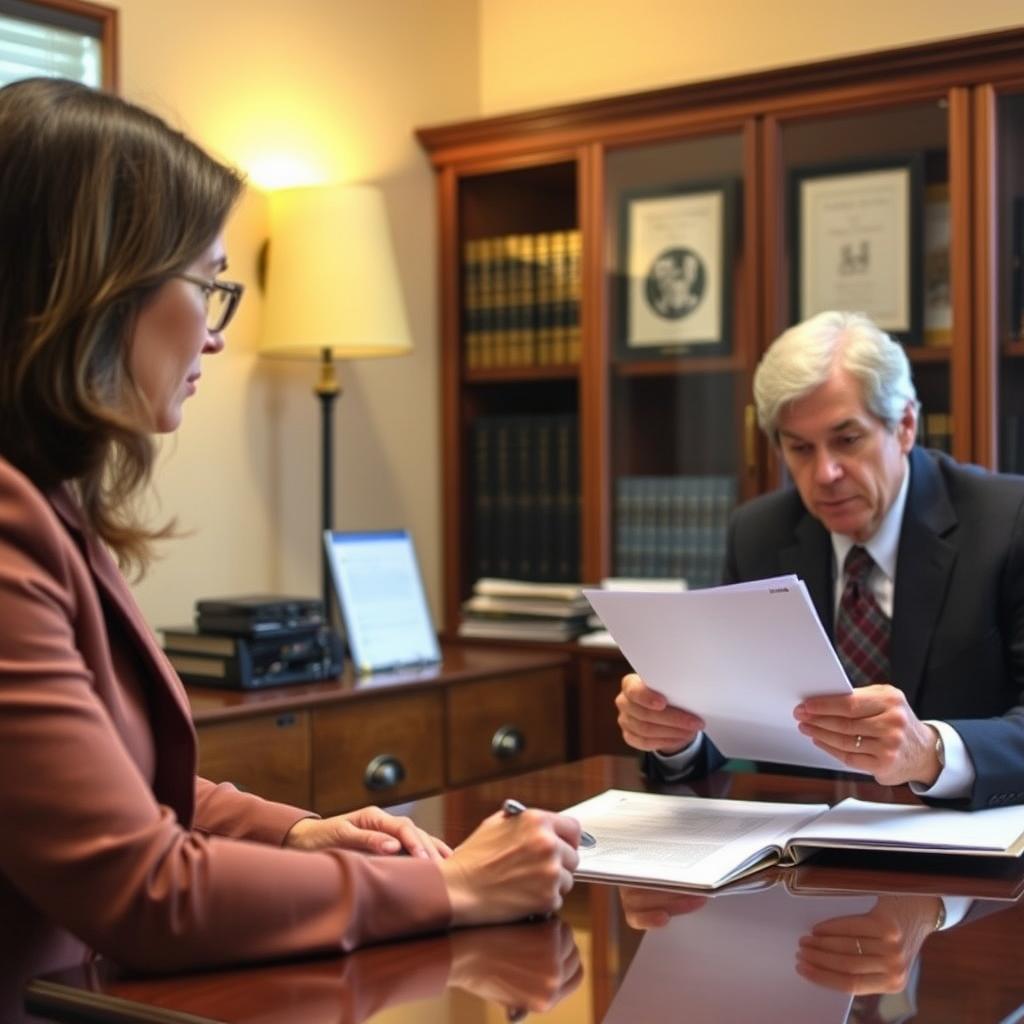
Recognition Of Foreign Divorce Lawyer Dinwiddie County, VA
You were married abroad—perhaps in India, the Philippines, or somewhere in Europe—and the marriage ended in a divorce decree issued by a foreign court. Now you live in Dinwiddie County, Virginia, and you need that foreign divorce recognized here. You may be remarrying, dividing property, or simply want the certainty that Virginia will treat your divorce as valid. At Law Offices Of SRIS, P.C., Mr. Sris and his Of Counsel assist clients throughout Dinwiddie County with recognition‑of‑foreign‑divorce matters. Reach our location at (888) 437‑7747 to discuss your situation. Law Offices Of SRIS, P.C. – Advocacy Without Borders.
How Virginia Courts Handle a Foreign Divorce Decree
Virginia does not automatically grant full faith and credit to a divorce entered by a court in another country. Instead, the Commonwealth’s courts apply principles of international comity to determine whether the foreign decree should be recognized and given legal effect within Virginia. Generally, a Virginia court will recognize a divorce obtained abroad if the foreign court had jurisdiction over the parties, the divorce was entered according to the law of that country, and the decree does not violate Virginia public policy. The same comity analysis applies whether the foreign divorce was obtained in a civil‑law system, a religious tribunal, or a common‑law jurisdiction.
For residents of Dinwiddie County, the decision to recognize a foreign divorce often arises during a subsequent marriage application, a child custody dispute, or an equitable distribution proceeding in the Dinwiddie County Circuit Court. India is not a signatory to the 1980 Hague Convention on Civil Aspects of International Child Abduction. The Circuit Court, located at the Dinwiddie Courthouse, Dinwiddie, VA 23841, has exclusive original jurisdiction over divorce matters under Va. Code § 20‑96. When a party files a Complaint for divorce or a separate petition to declare the validity of a foreign decree, the judge applies the comity framework. Because the analysis is fact‑intensive and the consequences of non‑recognition can be severe—affecting spousal support rights, property division, and even the validity of a later marriage—individuals in Dinwiddie County benefit from the guidance of an attorney experienced in cross‑border family law.
Frequently Asked Questions
What does it mean to “recognize” a foreign divorce in Virginia?
Recognition means a Virginia court treats the foreign divorce as legally effective within the Commonwealth. Once recognized, the Decree can be enforced regarding marital status, property division, and support obligations just as if it had been issued by a Virginia judge. Without recognition, the parties remain married under Virginia law even though they may be divorced abroad.
Do I need to start a new lawsuit in Dinwiddie County to have my foreign divorce recognized?
Yes. Typically, you must file a Complaint or a petition in the Dinwiddie County Circuit Court asking the court to declare the foreign divorce valid and enforceable in Virginia. The filing fee for a divorce complaint is approximately $86 (as of this writing; fees change). The petition must include certified copies of the foreign decree and evidence of the foreign court’s jurisdiction. Mr. Sris and his Of Counsel can help you prepare the necessary documents and present the case to the court.
Will the Dinwiddie County Circuit Court automatically recognize an Indian divorce?
Not automatically. An Indian divorce must still pass Virginia’s comity review. A court in Virginia will examine whether the Indian court had proper jurisdiction and whether the divorce was granted under the Hindu Marriage Act, Special Marriage Act, or the applicable personal law. If the parties had an Indian domicile at the time, the divorce is generally recognized. However, complexities can arise if both parties were living in the United States when the Indian proceeding was initiated, or if the decree was ex parte. On first reference, the relevant Indian statute is cited as the Bharatiya Nyaya Sanhita (formerly Indian Penal Code) for any criminal-law aspects, though divorce itself is governed by family law statutes.
What if my foreign divorce includes orders about property or support—are those recognized, too?
Property‑division and spousal‑support orders contained in a foreign divorce decree are reviewed under a separate comity standard. A Virginia court may enforce a foreign money judgment under the principles of comity, but it is not required to do so if the foreign court lacked personal jurisdiction over the defendant or if the judgment offends Virginia public policy. For a Dinwiddie County litigant, the safest course is to ask the Circuit Court to recognize both the divorce and any financial orders in a single proceeding.
How does the Dinwiddie County Circuit Court view divorce decrees from a religious tribunal, such as a Catholic annulment or an Islamic talaq?
The court will examine whether the religious tribunal’s process complied with basic due process and whether the resulting decree is comparable to a civil divorce. A Catholic annulment that declares the marriage void ab initio is treated differently from a civil divorce decree. A talaq pronounced unilaterally may not be recognized if the wife was not given notice or an opportunity to be heard. Each submission is evaluated case‑by‑case, applying comity principles and Virginia’s public policy against unfairness.
Can I use a foreign divorce decree to get remarried in Dinwiddie County immediately?
You may apply for a marriage license from the Dinwiddie County Clerk of Circuit Court, but the Clerk will require satisfactory proof that the prior marriage has ended. A certified copy of the foreign decree, often accompanied by a certified translation if it is not in English, is usually sufficient. If the clerk or the issuing authority has doubts about the decree’s validity, they may require a court order of recognition. Consulting an attorney before you apply can help avoid delays or a rejected license application.
What documentation does the Dinwiddie County Circuit Court need to recognize a foreign divorce?
Typically, you must present a certified copy of the final decree from the foreign court, proof of the foreign court’s jurisdiction (such as evidence of domicile or residency), and a certified English translation if the decree is in another language. An apostille under the 1961 Hague Convention is not a precondition of recognition, but it can authenticate the decree’s origin if the issuing country is a party to the Convention. Your lawyer can advise which documents are necessary for your specific case.
What happens if my spouse disputes the recognition of the foreign divorce in Dinwiddie County?
A contested recognition proceeding is litigated like any other family‑law matter. The objecting party may challenge the foreign court’s jurisdiction, the fairness of the foreign proceeding, or the authenticity of the documents. The Dinwiddie County Circuit Court will hold a hearing, and both sides may present evidence. Mr. Sris and his Of Counsel are experienced in contested family‑law hearings and can advocate for your position before the court.
Does my child‑custody order from a foreign divorce automatically carry weight in Dinwiddie County?
Child‑custody orders entered by a foreign court are not entitled to the same full faith and credit as orders from another U.S. State. A Virginia court will consider the foreign custody order under the parens patriae doctrine and the trusted‑interest‑of‑the‑child standard in Va. Code § 20‑124.3. The court may give deference to the foreign order if it appears consistent with the child’s welfare, but it is not bound by it. If the child is in Dinwiddie County, the local Juvenile and Domestic Relations District Court may have concurrent jurisdiction over custody issues.
How long does it take to get a foreign divorce recognized in Dinwiddie County?
The timeline varies by case complexity and the court’s calendar. An uncontested recognition may be resolved within a few months of filing; a contested matter involving jurisdictional challenges can take longer. Mr. Sris and his Of Counsel work to present your case efficiently, and a consultation at (888) 437‑7747 can provide a better estimate based on your facts.
What is the difference between “domesticating” and “recognizing” a foreign divorce decree?
“Domesticating” a foreign decree turns it into a Virginia judgment that can be enforced in the same manner as a Virginia court order—for example, to collect support arrears using Virginia’s enforcement mechanisms. “Recognizing” the divorce simply acknowledges that the marriage has been dissolved; it may not, by itself, create an enforceable money judgment. Often, a single petition asks for both recognition and domestication so that all aspects of the foreign decree can be enforced in the Commonwealth.
Do I need a lawyer to have my foreign divorce recognized, or can I handle it on my own?
You are not required by law to hire a lawyer, but the process involves complex conflict‑of‑laws rules, international evidence requirements, and procedural deadlines. A mistake can result in the court refusing to recognize your divorce, leaving your marital status uncertain under Virginia law. For guidance on your specific situation, reach Law Offices Of SRIS, P.C. at (888) 437‑7747.
About Mr. Sris and His Of Counsel Team
Mr. Sris, Owner and Founder of Law Offices Of SRIS, P.C., is a former prosecutor whose practice concentrates on family law across Virginia, Maryland, the District of Columbia, New Jersey, and New York. He and his Of Counsel team bring extensive combined legal experience to international family‑law matters, including the recognition of foreign divorce decrees in Dinwiddie County. Mr. Sris testified before the Virginia House Courts of Justice Committee in support of 2019 HB 635 (chief patron Del. David Bulova). Together, Mr. Sris and his Of Counsel appear in the Dinwiddie County Circuit Court and work to achieve a favorable resolution for each client. Results may vary. To discuss your foreign divorce recognition, contact us at (888) 437‑7747.
Related legal support in Virginia:
Attorney advertising. Prior results do not guarantee a similar outcome.
Results may vary.
Case results depend on a variety of factors unique to each case.