
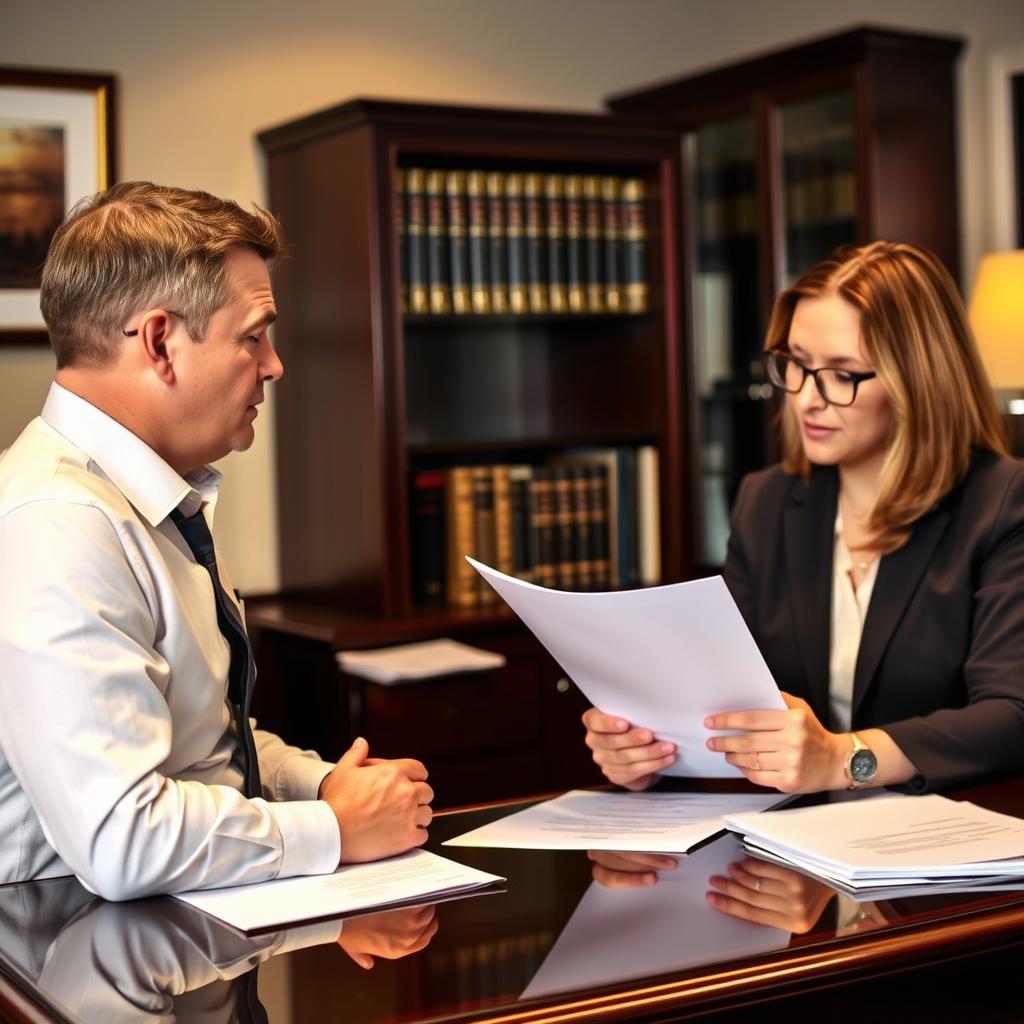
Postnup Lawyer Powhatan County, VA
You’ve already built a life together, and the last thing you want is a legal fight over assets if your marriage stumbles. But life changes — a new business, an inheritance, a career shift, or even a rough patch — can leave you wondering whether the financial understanding you and your spouse share today will hold up in court. A postnuptial agreement can define those understandings in writing, giving both of you clarity and a roadmap if the unexpected happens. In Powhatan County, drafting a valid postnuptial agreement means more than just putting promises on paper: it must meet Virginia’s statutory requirements under the Premarital Agreement Act, withstand scrutiny of voluntariness and full disclosure, and be crafted so it doesn’t inadvertently undermine your rights. Mr. Sris, Owner and Founder of Law Offices Of SRIS, P.C., has guided spouses through postnuptial planning for more than two decades. He brings a former prosecutor’s perspective to the negotiation table — an advantage when anticipating how a judge might later view provisions that one spouse claims were unfair. If you are considering a postnup or have questions about an existing agreement’s enforceability, call (888) 437-7747 to schedule a consultation. Law Offices Of SRIS, P.C. – Advocacy Without Borders.
What Is a Postnuptial Agreement in Virginia?
Under Virginia law, a postnuptial agreement — often called a postmarital or postnup — is a written contract between spouses that resolves property division, spousal support, and related financial matters in the event of a separation, divorce, or death. It is governed by the Virginia Premarital Agreement Act, Va. Code § 20‑147 et seq., which applies equally to agreements made before or after marriage.
Unlike a prenuptial agreement, which is signed before the wedding, a postnup is executed during the marriage. That difference matters legally: because spouses already owe fiduciary duties to one another, courts examine postnuptial agreements more closely for signs of overreaching, duress, or inadequate financial disclosure. A postnup can address classification and division of property, including real estate, retirement accounts, business interests, and debts. It can also define whether and how much spousal support will be paid, though Virginia law does not allow an agreement to eliminate a court’s authority to award child support or determine child custody.
In Powhatan County, postnuptial agreement disputes are heard in the Powhatan County Circuit Court, which has jurisdiction over equitable distribution and divorce matters. Because the Circuit Court will evaluate the agreement’s fairness under Va. Code § 20‑151, working with an attorney who understands how Powhatan County judges assess voluntariness and full disclosure can make the difference between an enforceable contract and one that is set aside.
How Postnuptial Agreements Are Handled in Powhatan County
Powhatan County lies within Virginia’s Twelfth Judicial District, and its Circuit Court at 3834 Old Buckingham Road, Suite C, Powhatan, VA 23139 is the forum where postnup enforcement or challenge typically arises — often within the context of a divorce, separation, or property dispute. If a postnuptial agreement is contested, the judge will first determine whether it meets the Act’s requirements: it must be in writing, signed by both parties, and entered into voluntarily. The court will also examine whether there was full and fair disclosure of each spouse’s assets and liabilities, or whether each spouse knowingly waived that disclosure.
In a rural county like Powhatan, where many families own farmland, a family business, or multi‑generational property, the financial picture can be complex and emotionally charged. A well‑drafted postnup can head off litigation by clearly defining what is separate property — for example, inherited land from a previous generation — and what is marital property subject to equitable distribution. Mr. Sris and his Of Counsel have handled postnuptial agreements involving closely held businesses, retirement plans that require qualified domestic relations orders (QDROs), and international assets. The firm’s Richmond Location (7400 Beaufont Springs Drive, Suite 300, Room 395, Richmond, VA 23225) serves clients throughout Powhatan County, giving you access to experienced counsel without the need to travel to Northern Virginia.
While mediation is available in Virginia as an alternative to litigation, it is not mandatory. Many couples choose to negotiate the terms of a postnuptial agreement with their own attorneys and then present the executed document to the court as part of a larger marital settlement, if a divorce later occurs. When negotiations stall, Mr. Sris’s background as a former prosecutor is invaluable: he knows how to frame a settlement proposal so that the risk of a judge’s adverse ruling on an unfair provision motivates the other side to compromise.
Strategy Options for Your Postnuptial Agreement
Every postnuptial agreement starts with the couple’s goals: some spouses want to protect a business that one of them built before the marriage; others want to shield an inheritance from becoming marital property; still others want to set clear spousal support terms so that neither side faces financial uncertainty if the marriage ends. Because Virginia is an equitable distribution state rather than a community‑property state, the default rule is that a judge divides marital property fairly — but not necessarily equally — after considering eleven statutory factors under Va. Code § 20‑107.3. A valid postnup allows you to override that default and decide the outcome yourselves.
A strategic approach considers not just the drafting of the agreement but also the timing and the negotiating posture. For instance, if one spouse has recently received a large gift or bonus, entering into a postnup swiftly can help preserve its character as separate property. Conversely, if the marriage is experiencing strain, it may be wise to document the negotiation process carefully to rebut any later claim of duress. Mr. Sris often advises clients to exchange detailed financial statements and to sign the agreement well before any divorce filing, because a last‑minute agreement raises red flags. The goal is to build a record that the agreement was entered into freely, with both sides having all the information they needed.
Postnuptial agreements can also be used as a tool for marital reconciliation: by clarifying financial expectations, couples sometimes remove the biggest source of conflict in their relationship. This is a legitimate use that Virginia courts respect, provided the agreement does not attempt to dictate personal conduct or child‑related matters.
What to Expect When Working with Our Firm
When you contact Law Offices Of SRIS, P.C. about a postnuptial agreement, the process begins with a confidential consultation. During that meeting, you and Mr. Sris will discuss your financial circumstances, your goals, and any concerns you have about the other spouse’s willingness to negotiate. If both spouses are cooperative, Mr. Sris can draft an agreement that reflects your mutual understanding and then work with your spouse’s attorney to finalize terms. If only one spouse is seeking protection, Mr. Sris will explain how to approach the conversation and, if necessary, how to build a record that supports voluntariness.
Throughout the process, you can expect realistic discussions about what a Virginia court will accept. For instance, a waiver of spousal support may be enforceable, but only if the agreement is fair and equitable when executed, not just when challenged. A provision that leaves one spouse destitute while the other retains all the wealth may be struck down regardless of what the paper says. Mr. Sris will walk you through these guardrails and help structure an agreement that is likely to survive judicial scrutiny.
Because each postnuptial agreement is unique, timelines vary by case complexity and the speed of negotiations. Some agreements are finalized within weeks; others require months of back‑and‑forth, particularly if forensic accountants or business valuators are needed to assess complex assets. Our firm does not charge for the initial consultation, and we offer payment plans for clients who need them. Reach our Richmond Location at (888) 437‑7747 to begin.
About Mr. Sris and His Of Counsel Team
Mr. Sris founded Law Offices Of SRIS, P.C. in 1997 and has built a multi‑state practice that serves clients across Virginia, Maryland, the District of Columbia, New Jersey, and New York. A former prosecutor, Mr. Sris understands how courtroom advocacy and careful preparation affect outcomes — skills he brings to every postnuptial agreement negotiation. He testified before the Virginia House Courts of Justice Committee in support of 2019 HB 635 (chief patron Del. David Bulova), which updated the equitable distribution statute to improve procedures for dividing retirement assets. His testimony reflects his deep familiarity with Virginia family law and his commitment to practical, fair results.
Mr. Sris and his Of Counsel bring over 120 years of combined legal experience. Results may vary. All Of Counsel attorneys are engaged through Excella, bringing specialized knowledge in family law, business valuation, and complex financial matters. Together, they have documented 4,739+ case results across all practice areas since 1997. Results may vary.
Frequently Asked Questions About Postnuptial Agreements
What is the difference between a prenuptial and a postnuptial agreement?
A prenuptial agreement is signed before marriage, while a postnuptial agreement is executed after the wedding. Both are governed by the Virginia Premarital Agreement Act, but postnups face closer court scrutiny because spouses owe fiduciary duties to one another. This means a judge will look more carefully at whether the agreement was entered into voluntarily and with full financial disclosure. Still, a properly drafted postnup is fully enforceable in Virginia if it meets the statutory requirements.
Do I really need a lawyer for a postnuptial agreement in Virginia?
You are not legally required to hire a lawyer to draft a postnuptial agreement, but the risks of going without one are substantial. Without legal guidance, you may inadvertently create an unenforceable agreement — for example, by including child custody provisions that courts will disregard, or by failing to disclose assets sufficiently. An experienced family law attorney ensures the agreement complies with the Premarital Agreement Act, advises on what terms a Virginia judge will uphold, and helps you document the negotiation process so that voluntariness is clear.
Can a postnuptial agreement be challenged in Powhatan County?
Yes. A spouse may challenge a postnuptial agreement on grounds such as fraud, duress, unconscionability, or failure to make fair and reasonable disclosure. In Powhatan County, these challenges are heard by the Circuit Court. The judge will examine the circumstances surrounding the signing: whether both spouses had independent legal advice, whether financial statements were exchanged, and whether the agreement was signed under pressure. To minimize the risk of a successful challenge, it is important to work with a lawyer who understands what local judges look for.
What happens if my spouse hides assets during the postnup process?
If a spouse conceals assets or provides incomplete financial information, the postnuptial agreement may be set aside in whole or in part. Virginia law requires either full disclosure or a knowing waiver of disclosure. If one spouse intentionally fails to disclose a significant asset, a court can find that the agreement was obtained through fraud and refuse to enforce it. Your attorney can help you build a record of the disclosures that were made and, if necessary, hire forensic accountants to trace missing assets.
Can a postnuptial agreement address spousal support in Virginia?
Yes, a postnuptial agreement can define the amount, duration, or waiver of spousal support, as long as the provision does not leave one spouse unable to meet basic needs at the time of enforcement. The court will examine whether the waiver was fair and equitable when made. If circumstances have changed dramatically since the signing — for example, one spouse becomes disabled — the court may still modify support, but a clear, well‑drafted postnup gives you a strong starting point.
How much does it cost to get a postnuptial agreement in Powhatan County?
The cost of a postnuptial agreement depends on the complexity of your assets, whether both sides are cooperative, and whether attorneys such as business valuators are needed. Simple agreements may involve a fixed‑fee arrangement; more complex ones are handled on an hourly basis. At Law Offices Of SRIS, P.C., fees vary by case, and we offer payment plans. To get a tailored estimate, call (888) 437‑7747 and schedule a confidential consultation.
For a more detailed look at Virginia family law statutes, see our comprehensive analysis at srislawyer.com.
Related family law resources: Family Law Lawyer Fairfax County, VA | Family Law Lawyer Prince William County, VA | Family Law Lawyer Loudoun County, VA | Family Law Lawyer Richmond, VA | Separation Agreement Lawyer Powhatan, VA
Virginia primary sources: Va. Code Title 20 (Domestic Relations) | Powhatan County Circuit Court | SCC Business Entity Filings
Attorney advertising. Prior results do not guarantee a similar outcome. Case results depend on a variety of factors unique to each case. Attorney responsible for this advertising: Mr. Sris. Results may vary.