
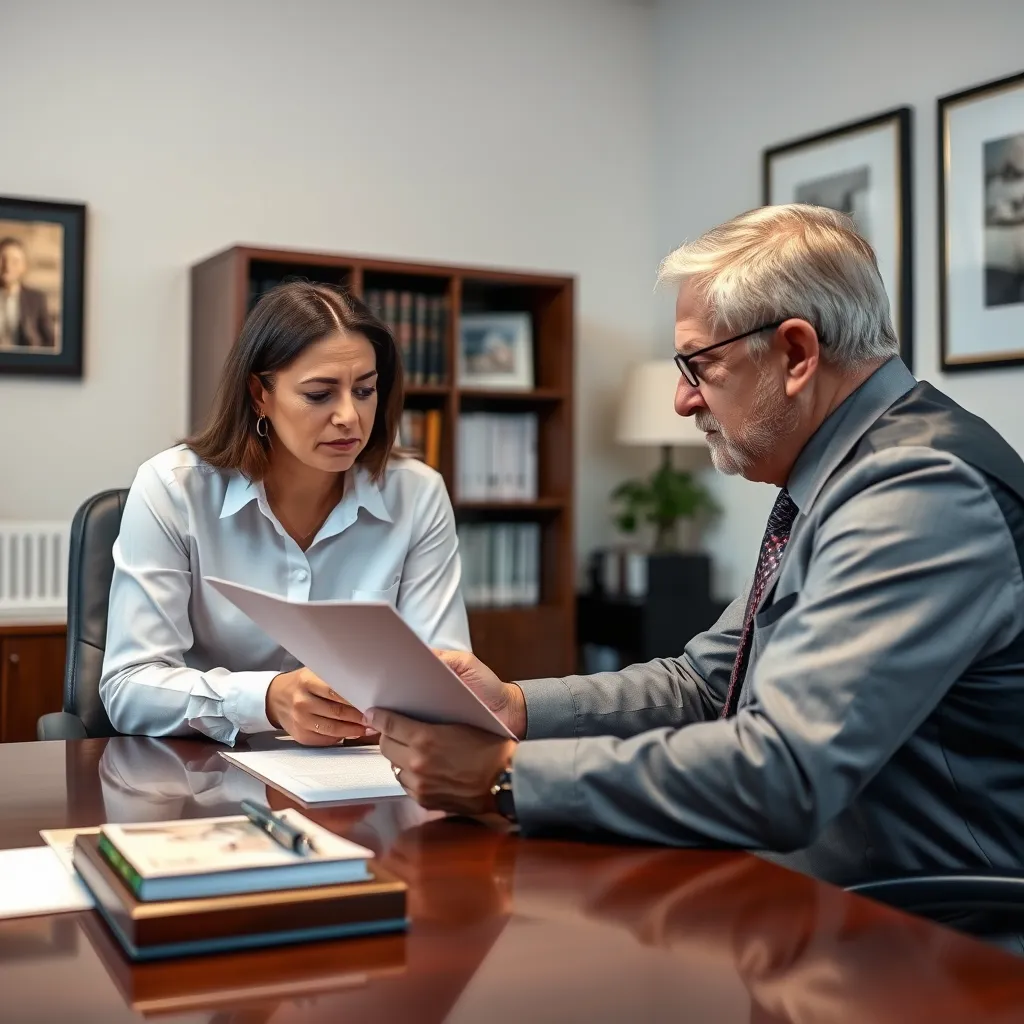
Marital Agreement Lawyer Manassas, VA
Protecting your financial future through comprehensive and legally sound marital agreements.
Law Offices Of SRIS, P.C.
By appointment only. Call (888) 437-7747 to schedule a consultation.
Serving Manassas, VA | Prince William County
Divorce and separation are inherently stressful times, marked by complex emotional and financial upheaval. When couples decide to separate, one of the most critical components to address is the division of marital assets and debts. This is where a comprehensive marital agreement becomes not just advisable, but essential. At Law Offices Of SRIS, P.C., we understand that every separation in Manassas, VA, is unique. Our focus as a dedicated Marital Agreement Lawyer in Manassas, VA is to provide clear, strategic counsel that helps you secure your rights and build a stable financial future, minimizing conflict while maximizing fairness.
A marital agreement—sometimes called a separation agreement or prenuptial/postnuptial agreement—is a legally binding contract drafted and negotiated by both parties. Its purpose is to outline how assets acquired during the marriage (like real estate, retirement funds, and vehicles) will be divided, and how spousal support (alimony) will be calculated and paid, all while you are still married or shortly after separation. Because Virginia law regarding marital property can be intricate, navigating these documents requires specialized local knowledge.
What Are Marital Agreements in Virginia?
In Virginia, the division of property is governed by equitable distribution principles, which aim for a fair, though not necessarily equal, split of marital assets. A well-drafted marital agreement serves as a roadmap, preemptively addressing potential points of conflict before they escalate into costly litigation. These agreements allow parties to negotiate terms outside of the courtroom, saving significant time and emotional distress.
These agreements can cover several key areas:
- Division of Real Property: How homes, jointly owned land, or investment properties will be split or sold.
- Debt Allocation: Determining who is responsible for specific debts incurred during the marriage.
- Spousal Support (Alimony): Establishing clear guidelines for temporary and permanent support payments.
- Asset Protection: Defining what assets remain separate property versus what constitutes marital property subject to division.
If you are considering these arrangements, understanding the legal framework is the first step. For more general guidance on the process of divorce in Virginia, you can review our divorce lawyer services.
Why Local experience is Crucial for Marital Agreements in Manassas, VA
While the principles of marital law are statewide, the execution and interpretation of these laws are highly localized. Virginia courts, including those serving Manassas, VA, have specific precedents and procedural rules that must be followed. A general practice lawyer may not be as familiar with the nuances of Prince William County court filings or the specific judicial expectations regarding financial disclosures in this area.
Our firm’s deep roots in the Manassas community mean we are acutely aware of the local legal landscape. We know the specific challenges faced by families in this region, whether related to property lines unique to Prince William County or the particular dynamics of family life here. This local insight allows us to draft agreements that are not only legally sound under Virginia Code but are also practical and enforceable within the Manassas judicial system.
If you are looking for reliable representation, remember that seeking a Marital Agreement Lawyer in Manassas, VA who understands local customs is vital to achieving an amicable resolution. We guide you through every step, from initial consultation to final filing.
The Process of Drafting and Negotiating Agreements
Drafting a marital agreement is a structured process that requires meticulous documentation and careful negotiation. It does not happen overnight. Typically, the process involves several distinct phases:
- Discovery and Disclosure: Both parties must provide full, transparent financial disclosure. This includes tax returns, bank statements, investment accounts, and property deeds. This step is non-negotiable for a fair agreement.
- Drafting the Agreement: Our attorneys draft the initial document, incorporating all agreed-upon terms. We ensure the language is precise, legally robust, and enforceable under Virginia law.
- Review and Negotiation: You will have ample time to review the document with us. We guide you through every clause, ensuring you understand what you are signing. Negotiations may involve mediation or direct communication between counsel.
- Execution and Filing: Once both parties sign, the agreement is often submitted to the court to be incorporated into a final divorce decree, giving it the full weight of judicial approval.
We manage this entire process, acting as your advocates to ensure that your interests are protected at every turn. Don’t navigate this complex legal terrain alone; contact us today to discuss how our divorce lawyer services can help.
How Mr. Sris and the Firm’s Of Counsel Attorneys Handle Marital Agreement Cases in Manassas
Handling marital agreements requires a blend of rigorous legal drafting skill and empathetic client management. Our approach begins with an intensive, confidential review of your entire financial picture. We don’t just look at the assets; we analyze the history, the source, and the potential tax implications of every item. This thorough groundwork ensures that the final agreement is not only fair today but remains resilient against future legal challenges.
When working on a case in Manassas, VA, our team—including Mr. Sris and our trusted Of Counsel attorneys—utilizes a multi-faceted strategy. We often recommend early mediation to keep the process collaborative. Our goal is always to help our clients achieve a resolution that allows them to move forward with their lives, rather than being entangled in years of costly litigation. We are committed to ensuring that every client understands their rights and obligations before signing any document.
About Mr. Sris and the Firm’s Of Counsel Attorneys
The foundation of our practice rests on decades of experience and an unwavering commitment to client advocacy. Mr. Sris, Owner and Founder, brings a wealth of knowledge derived from his career, including serving as a former prosecutor. His thorough understanding of criminal law, combined with his experience in family matters, allows him to approach marital agreements from every possible angle—be it financial, custodial, or punitive. He is admitted to practice law across five jurisdictions: Virginia, Maryland, the District of Columbia, New Jersey, and New York.
The firm’s Of Counsel attorneys are highly respected independent practitioners who bring specialized experience in various facets of family law. They work alongside Mr. Sris to provide a comprehensive support structure for our clients. While we maintain a collective focus on your needs, the strength of our counsel comes from this diverse group of seasoned legal minds. We ensure that whether your case involves complex asset division or sensitive custody issues, you receive experienced representation from the entire network.
Serving the Manassas Community
We are dedicated to serving the entire Prince William County area. Our local knowledge ensures that your case is handled with regional awareness.
If you are located nearby, we also assist clients needing a Stafford County divorce lawyer or representation from a Gainesville family law attorney. Our commitment to the Manassas community remains our highest priority.
For a comprehensive overview of all aspects of family law, please visit our divorce lawyer practice page.
Frequently Asked Questions About Marital Agreements
What is the difference between a prenuptial and postnuptial agreement?
A prenuptial agreement is signed before marriage to define property rights. A postnuptial agreement is signed during or after the marriage, often used when circumstances change or when divorce negotiations begin. Both aim to provide clarity on asset division.
Does a marital agreement always prevent me from getting alimony?
Not necessarily. While an agreement can define spousal support, it must be reviewed by a judge to ensure it is fair and enforceable under Virginia law. The court retains the right to modify terms if circumstances change significantly.
How long does it take to finalize a marital agreement in Manassas?
The timeline varies greatly based on the complexity of your finances and the willingness of both parties to negotiate. While we strive for efficiency, a comprehensive agreement can take several months from initial disclosure to final court filing.
Can I modify an existing marital agreement later?
Yes, agreements are not permanent. If there is a significant change in circumstances—such as a major career shift or the birth of a child—you can petition the court to modify the terms, provided you can prove material change.
What documents do I need to prepare for my consultation?
Please gather all financial records, including tax returns (last 3-5 years), bank statements, investment account summaries, and deeds for any real estate you own or co-own.
Is it better to negotiate an agreement with a lawyer or mediate?
Mediation is excellent for communication and keeping emotions low. However, having an experienced lawyer like us present ensures that the legal rights of both parties are fully protected and that the final document is airtight.
What happens if one party refuses to sign the agreement?
If negotiations stall, the matter will proceed through formal litigation. This is significantly more expensive, time-consuming, and emotionally draining than resolving it through a negotiated agreement.
Take Control of Your Future with experienced attorney Counsel
Navigating the legal complexities of marital agreements in Manassas, VA, requires more than just knowledge of the law; it requires strategic advocacy. The stakes are too high to leave to chance. Our team at Law Offices Of SRIS, P.C. is here to guide you through every document, negotiation, and court filing with discretion and experience.
Don’t wait until conflict escalates into litigation. Take the proactive step of speaking with a trusted Marital Agreement Lawyer in Manassas, VA today. We are ready to discuss your specific situation by appointment only.
Call (888) 437-7747 or visit our location for a confidential consultation.
The information provided on this website is for informational purposes only and does not constitute legal advice. Every case has unique facts and circumstances, and the law is subject to change. You should consult with a qualified attorney regarding your specific situation. Law Offices Of SRIS, P.C. Reserves the right to modify content at any time.
Case results depend on a variety of factors unique to each case.
Attorney advertising. Prior results do not guarantee a similar outcome.