
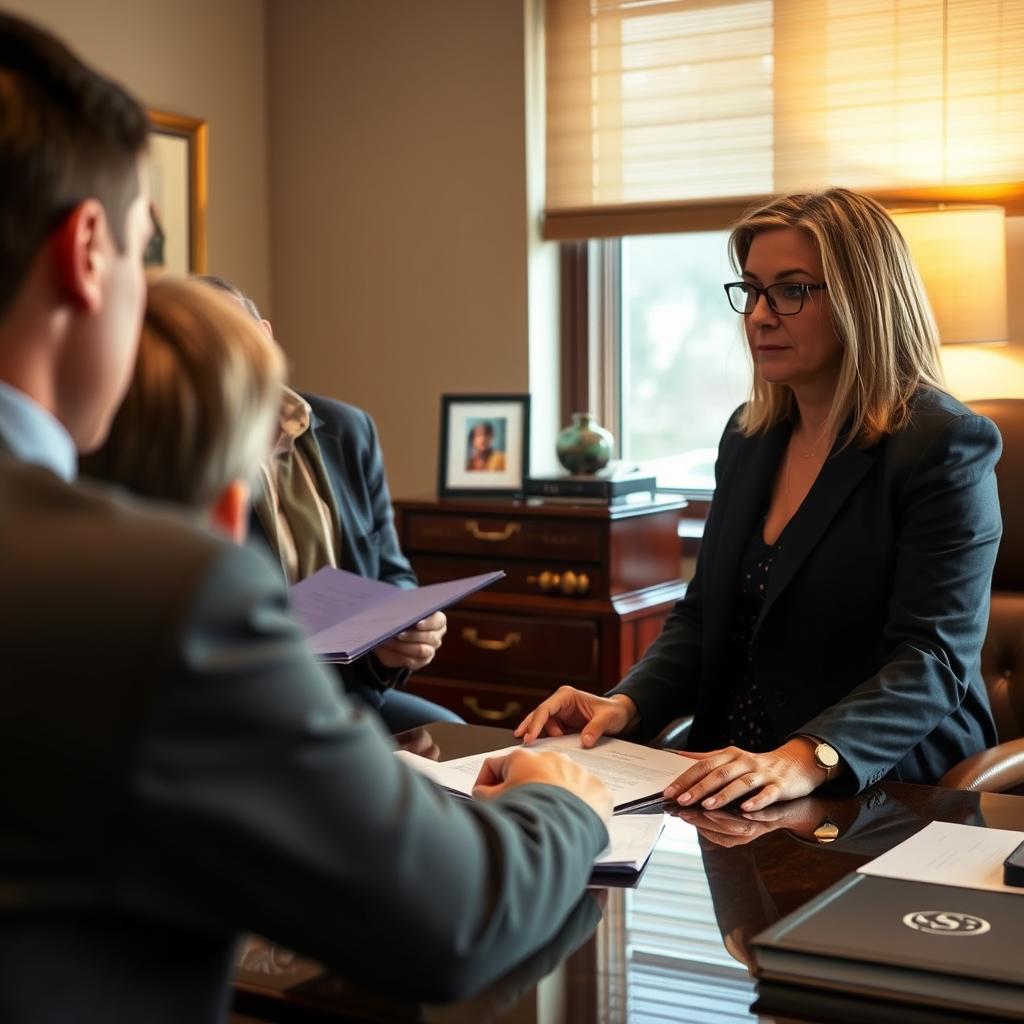
Desertion Divorce Lawyer Shenandoah County, VA
You have been living apart from your spouse for over a year after they walked out of the marital home and never returned. You now live in Woodstock, in the heart of Shenandoah County, and you are ready to move forward with your life by filing for divorce. Under Virginia law, willful desertion for one year is a fault ground for divorce (Va. Code § 20-91(6)). But presenting proof of desertion—especially if your spouse contests the claim or denies the abandonment—requires careful preparation and an understanding of how the Shenandoah County Circuit Court evaluates this evidence. Mr. Sris, Owner and Founder of the firm, and the firm’s Of Counsel attorneys represent clients throughout Shenandoah County in desertion divorce matters, working to establish the statutory elements and move the case to resolution. Contact Law Offices Of SRIS, P.C. at (888) 437-7747 to schedule a consultation. For a full statutory breakdown, see our comprehensive analysis on srislawyer.com. Law Offices Of SRIS, P.C. – Advocacy Without Borders.
What Desertion Divorce Means in Shenandoah County
Desertion, as a fault ground for divorce in Virginia, requires proof that one spouse voluntarily and without justification left the marital relationship, that the separation has continued without interruption for at least one year, and that the departure was against the wishes of the spouse who remained. Desertion is different from a no-fault separation because the party alleging desertion must show that the other spouse’s leaving was wrongful. The Shenandoah County Circuit Court—located at 112 South Main Street in Woodstock—hears all divorce, equitable distribution, and spousal support matters filed in the county, while the Shenandoah County Juvenile and Domestic Relations Court may handle ancillary issues such as custody and child support.
Choosing a fault ground like desertion can affect how the court addresses spousal support and the division of marital property. Virginia follows equitable distribution under Va. Code § 20-107.3, meaning the judge divides marital assets fairly—but not necessarily equally—after considering eleven statutory factors. Evidence of desertion, particularly if it contributed to the breakdown of the marriage, is one factor the court may weigh. Because the fault ground also eliminates the need for the longer separation period that no-fault divorce typically requires when minor children are involved, some individuals in Shenandoah County choose to proceed on desertion when the facts support it. The firm appears regularly at the Shenandoah County courthouse and works with clients from Woodstock, Edinburg, Strasburg, Mount Jackson, Toms Brook, New Market, and other surrounding communities.
How Mr. Sris and the Firm’s Of Counsel Attorneys Approach Desertion Divorce Cases
When a client retains the firm for a desertion divorce, the immediate priority is confirming that the one-year desertion period has been met and that the evidence supports the claim. Mr. Sris and the firm’s Of Counsel attorneys gather witness testimony, correspondence, and any documentation that tends to prove the spouse’s intent to abandon the marriage. Virginia law requires at least one corroborating witness in an uncontested divorce hearing; in a desertion case, that witness often is a friend, neighbor, or family member who can attest to the spouse’s departure and the length of the separation. The firm helps clients identify appropriate corroborating witnesses and prepare for testimony.
If the divorce is contested—meaning the other spouse disputes the desertion allegation or raises claims of justification—the firm develops a litigation strategy focused on presenting clear, admissible evidence. This may include depositions, subpoenas for records, and, when appropriate, testimony from the client about the impact of the abandonment. Throughout the process, Mr. Sris and the firm’s Of Counsel attorneys keep clients informed about upcoming court dates and the progression of the case through the Shenandoah County Circuit Court. While every case is unique, the firm works to resolve desertion divorces efficiently, whether through negotiated settlement or trial before the judge.
What to Expect When Filing a Desertion Divorce in Shenandoah County
Once the decision is made to file, counsel drafts a complaint for divorce that states the ground of desertion and requests whatever ancillary relief is appropriate—spousal support, equitable distribution of marital property, and, if children are involved, custody and child support. The complaint is filed in the Shenandoah County Circuit Court, and the other spouse must be served with process. If the spouse cannot be located after diligent effort, alternative forms of service may be available under Virginia law.
After the defendant answers or the time for answering expires, the case proceeds according to the court’s docket. In an uncontested desertion divorce—where the other spouse either agrees or does not respond—a final hearing can often be scheduled relatively soon after the pleadings are complete. In a contested case, the court may hold a pendente lite hearing to address temporary support or custody issues while the divorce is pending, and the matter may ultimately proceed to trial. Because the judge must be satisfied that the statutory elements of desertion have been proven, the firm prepares clients for what they should expect during testimony and works to ensure the record is complete.
About Mr. Sris and the Firm’s Of Counsel Attorneys
Law Offices Of SRIS, P.C. was founded in 1997 by Mr. Sris, a former prosecutor. Mr. Sris is admitted in Virginia, Maryland, the District of Columbia, New Jersey, and New York, and he has practiced family law in Shenandoah County and throughout Virginia for many years. He testified before the Virginia House Courts of Justice Committee in support of 2019 HB 635 (chief patron Del. David Bulova). The firm’s Of Counsel attorneys bring experience in family law litigation, property division, and courtroom advocacy. Mr. Sris and the firm’s Of Counsel attorneys bring extensive combined legal experience. Results may vary. The firm serves clients from its Shenandoah/Woodstock location and remains available by phone at (888) 437-7747.
Frequently Asked Questions
What must I prove to obtain a divorce on the ground of desertion in Virginia?
You must show that your spouse willfully left the marital home without justification, continued the separation for at least one year, and did so against your wishes. Evidence can include your own testimony, witnesses who observed the departure or the long-term absence, and written records that document the spouse’s intent. The court will evaluate whether the separation was continuous and whether the leaving was truly abandonment. If the departing spouse claims justification—such as cruelty or constructive desertion—those defenses must be rebutted with credible evidence.
Do I need an attorney to handle a desertion divorce in Shenandoah County?
You are not legally required to hire an attorney, but proving desertion can be legally difficult without experienced guidance. The statutory requirements are strict, and a contested desertion case often involves evidentiary issues, motions, and cross-examination. Working with counsel helps ensure that your complaint is properly drafted, that the necessary corroborating witnesses are prepared, and that your interests in property division and support are protected throughout the proceedings.
How does desertion affect spousal support and property division in Virginia?
Because desertion is a fault ground, the court may consider the circumstances of the abandonment when determining spousal support and dividing marital property under Va. Code § 20-107.3. A spouse who deserted the marriage may receive less than an equal share of marital assets or be ordered to pay spousal support if the fault contributed to the dissolution of the marriage. The judge weighs the eleven equitable-distribution factors, and a finding of desertion is one factor that can influence the outcome.
What if my spouse contests the desertion claim?
If your spouse claims that the departure was justified—for example, due to your own misconduct—the case becomes contested and may proceed to a trial before the Shenandoah County Circuit Court judge. In that situation, the firm gathers additional evidence, may depose the opposing spouse, and prepares for comprehensive direct and cross-examination. The judge determines whether the evidence meets the statutory elements of desertion by a preponderance of the evidence. Contested desertion cases can be more time-consuming, but the firm works to position the evidence effectively so that the court can reach a decision.
How long does a desertion divorce take in Shenandoah County?
The timeline depends on whether the divorce is contested or uncontested, the court’s calendar, and the complexity of any related custody or property issues. Uncontested desertion divorces often proceed to a final hearing within a span of months once the one-year separation requirement has been satisfied. Contested cases or those involving substantial marital assets may take longer. The firm keeps clients informed about the expected timeline and works to move the case forward as efficiently as the facts and court schedule permit.
What documents should I gather before a consultation about a desertion divorce?
Helpful documents include any written evidence of your spouse’s departure, financial records that show separate living arrangements, and the names and contact information of people who can corroborate the separation. Bringing a list of marital assets and debts, tax returns, and any existing separation agreements also assists counsel in evaluating what additional relief may be appropriate. The firm uses the initial consultation to outline a strategy tailored to your situation and to identify any gaps in evidence that should be addressed early.
Can I still file on desertion if I have minor children with my spouse?
Yes, desertion is available as a fault ground even when minor children are born of the marriage. Proving desertion does not prohibit the court from deciding custody and child support under the trusted-interests standard in Va. Code § 20-124.3. The firm assists clients in Shenandoah County with both the divorce and the associated child-related matters so that the entire family law case can be resolved in a coordinated manner.
For guidance on your specific situation, reach Law Offices Of SRIS, P.C. at (888) 437-7747.
Family Law Representation in Nearby Counties
Our firm also represents clients in family law matters throughout the Shenandoah Valley and surrounding counties. Learn more about our services in these locations:
- Clarke County Family Law Lawyer
- Frederick County Family Law Lawyer
- Warren County Family Law Lawyer
- Rockingham County Family Law Lawyer
- Augusta County Family Law Lawyer
Primary Legal Resources
These official sources provide the statutory framework and court information referenced on this page:
Attorney advertising. Prior results do not guarantee a similar outcome. Results may vary. Law Offices Of SRIS, P.C. Shenandoah/Woodstock Location – 505 N Main St, Suite 103, Woodstock, VA 22664. Call (888) 437-7747. By appointment only.
Case results depend on a variety of factors unique to each case.