
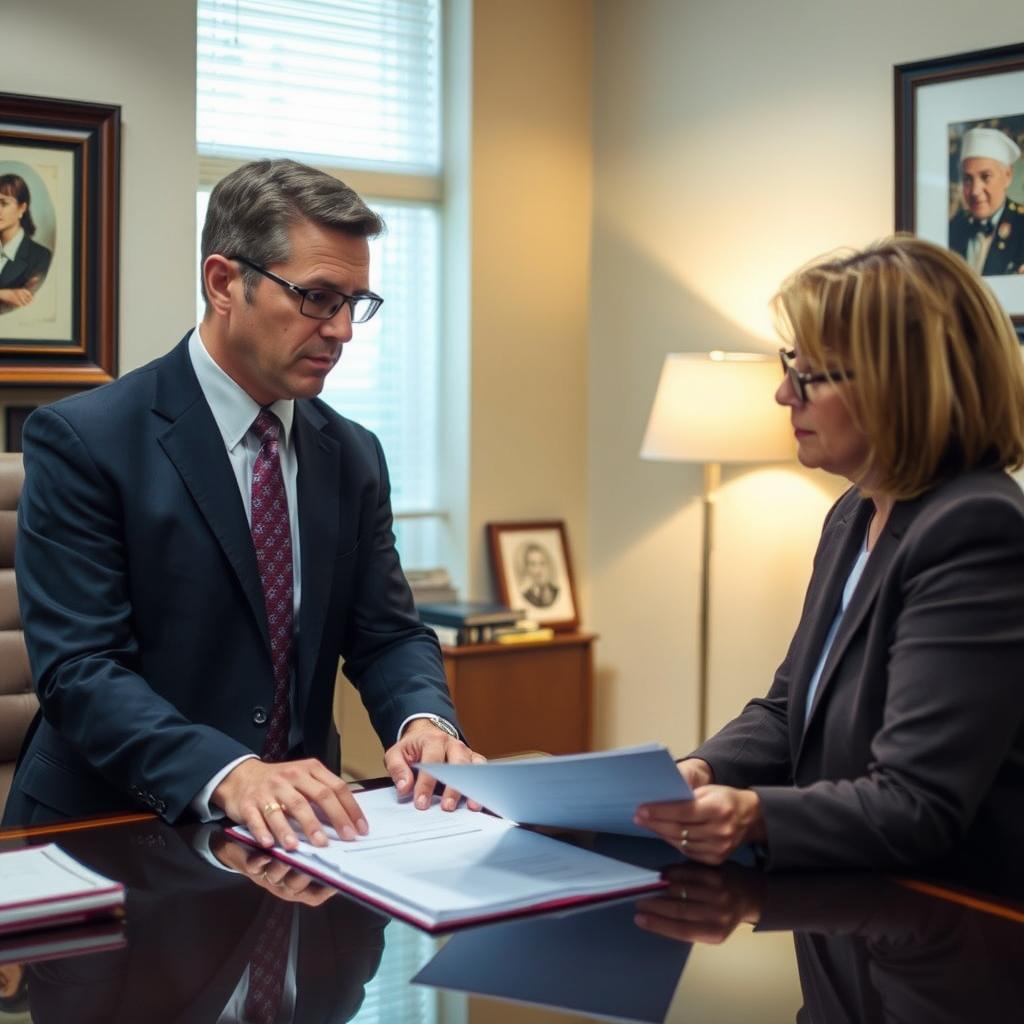
Armed Forces Divorce Lawyer Lexington, VA
You’re an active‑duty service member whose home of record is Lexington, Virginia, or you’re the civilian spouse of a VMI faculty member stationed here. The marriage is ending, and you’re facing questions about military pension division, jurisdiction when one spouse is deployed, and how Virginia’s equitable distribution laws apply to a service member’s benefits. Law Offices Of SRIS, P.C. represents clients across the Twenty‑fifth Judicial District, including Lexington City, in family law matters that involve members of the armed forces. Mr. Sris, Owner and Founder, and the firm’s Of Counsel attorneys bring experience in military divorce, property division, and child custody to help you work toward a resolution that protects your financial and parental interests. Call (888) 437‑7747 to request a consultation. Law Offices Of SRIS, P.C. – Advocacy Without Borders.
Mr. Sris, Owner and Founder, admitted in Virginia, Maryland, the District of Columbia, New Jersey, and New York. Practicing since 1997. Se habla español. Call (888) 437‑7747.
The firm’s Shenandoah Location at 505 N Main St, Suite 103, Woodstock, VA 22664 serves clients at the Lexington courts. Contact us at (888) 437‑7747 for directions and appointment scheduling.
What Armed Forces Divorce Means in Lexington, Virginia
Lexington is home to Virginia Military Institute and Washington and Lee University, which means the community includes a significant number of military families, veterans, and Department of Defense contractors. A divorce involving a service member or military retiree in Lexington is filed at the Lexington Circuit Court (2 South Main Street, Lexington, VA 24450). The Circuit Court has exclusive jurisdiction over divorce, equitable distribution, and spousal support under Va. Code § 20‑96. Separate matters—custody, visitation, child support, and protective orders—are heard in the Lexington Juvenile and Domestic Relations District Court.
For armed forces divorces, Virginia applies the same statutory framework as any divorce but adds layers of federal law, notably the Uniformed Services Former Spouses’ Protection Act (USFSPA), which governs how military retired pay may be divided. Virginia is an equitable distribution state under Va. Code § 20‑107.3, meaning the court will classify property as marital, separate, or hybrid and then divide it fairly—not necessarily equally. Military pensions accrued during the marriage are marital property subject to division, and a qualified domestic relations order (QDRO) may be necessary to effectuate the division. Service‑related disability pay generally remains the service member’s separate property, though it can be considered as income for spousal support calculations.
The residency requirements are the same: one party must have been domiciled in Virginia for at least six months before filing (Va. Code § 20‑97). A service member who is stationed elsewhere but whose home of record remains Virginia can still file here. Active‑duty status can also affect the separation period that must run before a no‑fault divorce can be granted—one year of living separate and apart, or six months if the couple has no minor children and has signed a separation agreement (Va. Code § 20‑91(9)). Fault‑based grounds—adultery, cruelty, desertion, or felony conviction—remain available if the evidence supports them.
How Mr. Sris and the Firm’s Of Counsel Attorneys Handle Armed Forces Divorce Cases
Mr. Sris, as a former prosecutor, brings courtroom experience and an understanding of how evidence is scrutinized. Together with the firm’s Of Counsel attorneys, he addresses the distinct procedural challenges of armed forces divorce—coordinating service of process on a deployed spouse, obtaining accurate leave and earning statements for the Defense Finance and Accounting Service calculation, and navigating the interplay between Virginia equitable distribution and the USFSPA’s “10/10 rule” (which only determines direct payment, not whether the benefit is divisible).
The team works to negotiate comprehensive separation agreements when both parties are willing. When litigation is necessary, the firm’s attorneys appear regularly in the Lexington Circuit Court and J&DR Court. They consult forensic accountants and pension valuation attorneys when the marital estate includes Thrift Savings Plan accounts, Survivor Benefit Plan elections, or VA disability offsets. The timeline depends on the docket and the complexity of the assets, but the firm’s history of documented case results in Lexington City demonstrates its familiarity with local practice; the firm has recorded 14 total case results across all practice areas in the locality, with favorable outcomes in all reported instances. Results may vary.
About Mr. Sris and the Firm’s Of Counsel Attorneys
Mr. Sris founded Law Offices Of SRIS, P.C. in 1997. He is a former prosecutor who testified before the Virginia House Courts of Justice Committee in support of 2019 HB 635 (chief patron Del. David Bulova), legislation that updated Va. Code § 20‑107.3(g) concerning the equitable distribution of retirement benefits. His practice concentrates on complex family law matters, including those involving military families, and he is admitted to practice in Virginia, Maryland, the District of Columbia, New Jersey, and New York.
The firm’s Of Counsel attorneys are independent practitioners who bring their own professional experience—ranging from former state trooper service to extensive CPS and family law work—to the team. Together, Mr. Sris and the firm’s Of Counsel attorneys have documented case results across all practice areas since 1997. Results may vary.
Frequently Asked Questions
What is an armed forces divorce in Virginia?
An armed forces divorce is any divorce in which one or both spouses is a current or former member of the U.S. Military. In Virginia, the process follows the same statutory framework as civilian divorce but must account for federal laws governing military pensions, deployment stays under the Servicemembers Civil Relief Act, and jurisdiction when the service member is stationed outside the state. The Lexington Circuit Court handles all divorce and property division matters.
How does military service affect child custody in Lexington?
Military service can affect custody when deployment or relocation is part of the parent’s duties. Virginia courts decide custody based on the ten best‑interest factors in Va. Code § 20‑124.3. A parent’s military obligations do not automatically prevent them from receiving custody, but the court may require a family care plan or designate a temporary caregiver. The Lexington Juvenile and Domestic Relations District Court hears standalone custody petitions. India is not a signatory to the 1980 Hague Convention on Civil Aspects of International Child Abduction.
How is a military pension divided in a Virginia divorce?
Virginia treats the marital share of a military pension as marital property subject to equitable distribution. The court may award a percentage of the disposable retired pay to the former spouse under Va. Code § 20‑107.3, provided the parties were married during at least ten years of the member’s creditable service, a condition commonly known as the “10/10 rule” (which applies only to direct payment by DFAS, not division authority). A QDRO or military qualifying order is used to implement the division.
Can I file for divorce in Virginia if my spouse is deployed?
Yes, you can file, but the Servicemembers Civil Relief Act (SCRA) may allow the deployed spouse to request a stay of proceedings. The Lexington Circuit Court will require proper service of process, which may take additional time. Mr. Sris and the firm’s Of Counsel attorneys can help ensure compliance with SCRA requirements and move forward when appropriate.
What are the grounds for divorce in Virginia?
Virginia allows no‑fault divorce after a one‑year separation, or six months if the couple has no minor children and a signed separation agreement. Fault grounds—adultery, cruelty, willful desertion for one year, or felony conviction—are also available under Va. Code § 20‑91. Adultery is a fault ground that requires no waiting period but does require clear and convincing evidence.
How long does a divorce take in Lexington City, Virginia?
An uncontested divorce with a signed separation agreement typically resolves in two to four months after filing. A contested divorce, where the parties disagree on custody, support, or property division, commonly takes nine to eighteen months. High‑asset or international‑element cases may extend longer. The timeline depends on the court’s calendar and the complexity of the issues.
How much does a divorce cost in Lexington, Virginia?
The Circuit Court filing fee for a divorce complaint is approximately subject to change, and sheriff service of process costs roughly $12. Additional expenses may include private process server fees, guardian ad litem fees for custody matters (ranging from $500 to over $2,500), and mediation costs. Attorney fees vary by case. Contact the firm at (888) 437‑7747 to discuss your situation.
Is Virginia a community property state?
No. Virginia is an equitable distribution state. Under Va. Code § 20‑107.3, the court divides marital property fairly but not necessarily equally, considering eleven statutory factors. Separate property—assets owned before marriage, inheritances, and gifts—is generally excluded from division.
What should I bring to a consultation about a military divorce?
Bring your marriage certificate, separation agreement (if any), the last three leave and earnings statements, any prior custody or support orders, and a list of assets and debts. This helps the attorney assess the marital estate and any military‑specific issues, such as the Survivor Benefit Plan election or Thrift Savings Plan balances. For guidance on your specific situation, reach Law Offices Of SRIS, P.C. at (888) 437‑7747.
Do I need a lawyer for an armed forces divorce in Lexington?
You are not required to have a lawyer, but legal representation can help protect your rights, especially when military benefits and pension division are involved. The interplay between Virginia equitable distribution law and federal military pay statutes is complex. Mr. Sris and the firm’s Of Counsel attorneys have experience handling these matters and can help you pursue a fair settlement. Results may vary.
Additional Resources
Virginia Code Title 20 – Domestic Relations |
Lexington Combined Courts |
Virginia Judicial System
Related practice areas: Fairfax County Family Law | Fairfax City Family Law | Prince William County Family Law | Manassas Family Law | Falls Church Family Law
Attorney advertising. Prior results do not guarantee a similar outcome.
Case results depend on a variety of factors unique to each case.