
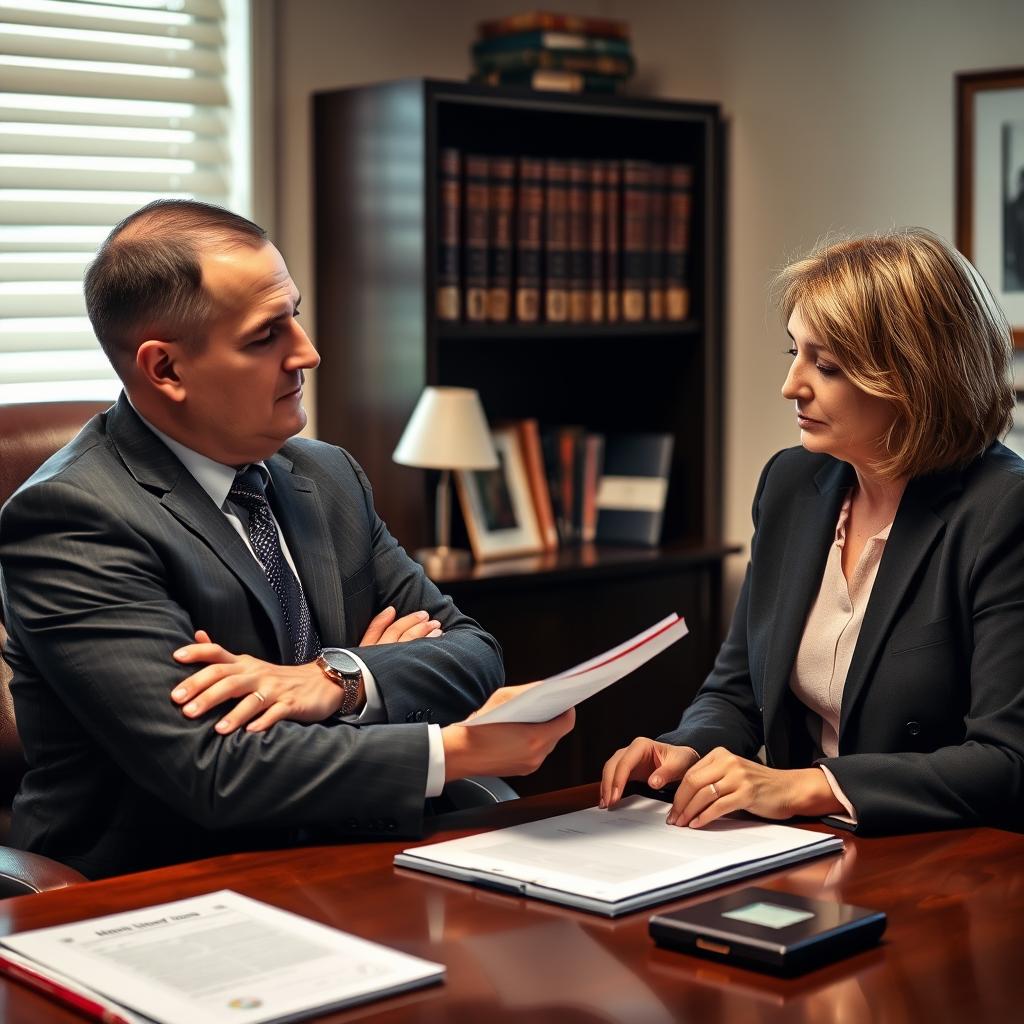
Armed Forces Divorce Lawyer Botetourt County, VA
You are stationed at or near Botetourt County, and your marriage is ending. Perhaps you are the service member facing deployment while a divorce case moves through the Virginia courts. Or you may be the civilian spouse of a military member, unsure how federal protections like the Servicemembers Civil Relief Act affect your right to move forward. Either way, a military divorce involves overlapping layers of Virginia family law and federal military regulations that a civilian divorce does not. Pension division under the Uniformed Services Former Spouses’ Protection Act, jurisdiction questions when one spouse is deployed, and child custody arrangements that must account for military service schedules all require careful attention. Mr. Sris and the firm’s Of Counsel attorneys represent military members and their spouses in Botetourt County Circuit Court and the surrounding communities of Fincastle, Daleville, Troutville, Blue Ridge, and Eagle Rock. To request a consultation, call (888) 437-7747. Law Offices Of SRIS, P.C. – Advocacy Without Borders.
Strategy Options for Military Divorce in Botetourt County
Military divorce in Virginia follows the same statutory framework as any other divorce under Va. Code § 20-91, but additional strategic considerations apply. A service member or military spouse must first decide whether to pursue a no-fault divorce based on separation or a fault-based divorce on grounds such as adultery or cruelty. No-fault divorce requires either a six-month separation with no minor children and a signed separation agreement, or a one-year separation. Fault grounds carry no mandatory waiting period but involve proving the alleged misconduct in court.
The question of jurisdiction is often more complex in military cases. Under Virginia law, one party must be a bona fide resident and domiciliary of the Commonwealth for at least six months before filing. A service member stationed in Virginia may file for divorce in Botetourt County if Virginia is their domicile or if they have established residency here. The SCRA permits service members to retain their home-state domicile regardless of where they are stationed, which means a military spouse may need to file in the service member’s state of legal residence instead. Mr. Sris and the firm’s Of Counsel attorneys evaluate residency, domicile, and the most favorable venue at the outset of every military divorce matter.
Military pension division is frequently the most significant financial issue. Under the USFSPA, state courts may treat disposable military retired pay as marital property subject to division. Virginia is an equitable distribution state, meaning the Botetourt County Circuit Court divides marital property fairly but not necessarily equally, considering the factors set forth in Va. Code § 20-107.3. The length of the marriage overlapping with military service, each spouse’s contributions, and the tax implications of pension division all factor into the court’s analysis. A properly drafted separation agreement or court order is necessary to secure a former spouse’s share of military retired pay through the Defense Finance and Accounting Service.
Under Va. Code § 20-91, a no-fault divorce in Virginia requires a six-month separation if there are no minor children and the parties have a signed separation agreement, or a one-year separation in all other cases.
Source: Va. Code § 20-91(9). Virginia Code § 20-91
Reviewed by Mr. Sris, admitted in VA/MD/DC/NJ/NY.
What to Expect in Botetourt County Circuit Court
Divorce cases in Botetourt County are heard in the Circuit Court, located at 20 E. Back Street, Suite A, in Fincastle. The Circuit Court has exclusive jurisdiction over divorce, equitable distribution, and spousal support under Virginia law. Separate matters involving child custody, visitation, and child support may be heard in the Botetourt County Juvenile and Domestic Relations District Court, though these issues are typically resolved alongside the divorce when both are pending.
The process begins with filing a complaint for divorce and serving the other party. In military divorces, service of process can be straightforward when both spouses are in the area, but may require coordination when one party is deployed or stationed elsewhere. Virginia requires at least one corroborating witness to testify in support of the grounds for an uncontested divorce. For a fully uncontested matter with a signed separation agreement, the timeline from filing to final decree depends on the court’s calendar and whether the mandatory separation period has already elapsed.
If the parties cannot agree on custody, support, or property division, the court may schedule a pendente lite hearing to address temporary matters while the case proceeds. Discovery, including financial disclosures and valuation of marital assets, follows. Military pension valuation often requires obtaining information from the Defense Finance and Accounting Service. Cases involving complex equitable distribution with retirement assets or business interests may require additional time for experienced attorney analysis. Throughout the process, the firm’s Of Counsel attorneys work with clients to pursue resolution through negotiation where possible and prepared litigation where necessary.
How Military Divorce Affects Your Rights and Obligations
Military divorce carries consequences beyond those of a civilian dissolution. The division of military retired pay is governed by the USFSPA, which permits Virginia courts to divide disposable retired pay as marital property but does not automatically entitle a former spouse to a share. The marital share is typically calculated based on the number of years the marriage overlapped with the service member’s creditable military service. A former spouse who is awarded a portion of military retired pay may receive direct payment from DFAS if the marriage lasted at least ten years overlapping with ten years of creditable military service. If the overlap is less than ten years, the former spouse must seek payment directly from the service member, which introduces enforcement considerations.
Child custody in military families presents unique challenges. Virginia courts determine custody based on the best interests of the child under Va. Code § 20-124.3, considering ten statutory factors. Deployment, temporary duty assignments, and permanent change of station orders all affect parenting time and require custody orders that accommodate military service obligations. Virginia law permits courts to enter temporary custody orders during a parent’s deployment and to reinstate the pre-deployment arrangement upon return. A family care plan, while required by military regulations for service members with minor children, does not control the court’s custody determination but may be considered as evidence of the parent’s planning and intent.
Health care coverage through TRICARE may continue for a former spouse under certain conditions, particularly if the marriage lasted at least twenty years overlapping with twenty years of creditable service. The former spouse’s eligibility depends on meeting the 20/20/20 rule; shorter marriages may qualify for transitional coverage under the 20/20/15 rule. These benefits are distinct from the property division and should be addressed explicitly in any separation agreement or court order. The court’s determination of spousal support considers the factors in Va. Code § 20-107.1, including the standard of living during the marriage, each spouse’s earning capacity, and the duration of the marriage. Results may vary.
About Mr. Sris and the Firm’s Of Counsel Attorneys
Mr. Sris is a former prosecutor who founded Law Offices Of SRIS, P.C. in 1997. He represents clients in family law matters, including military divorce, in Botetourt County and throughout Virginia. Mr. Sris testified before the Virginia House Courts of Justice Committee in support of 2019 HB 635 (chief patron Del. David Bulova), legislation that revised the equitable distribution statute governing retirement and pension division in Virginia divorces.
Mr. Sris is admitted to practice in Virginia, Maryland, the District of Columbia, New Jersey, and New York. The firm’s Of Counsel attorneys bring experience from a range of legal backgrounds and appear regularly in Virginia Circuit Courts and Juvenile and Domestic Relations District Courts. Together, Mr. Sris and the firm’s Of Counsel attorneys represent clients in divorce, equitable distribution, custody, and support matters throughout Botetourt County and the Shenandoah Valley region. The firm’s Shenandoah/Woodstock location serves clients in Botetourt County, and consultations are available by appointment. To speak with Mr. Sris or the firm’s Of Counsel attorneys, call (888) 437-7747.
Frequently Asked Questions About Military Divorce in Botetourt County
Where is a military divorce filed in Botetourt County?
Military divorces in Botetourt County are filed in the Botetourt County Circuit Court, located at 20 E. Back Street, Suite A, in Fincastle, Virginia. The Circuit Court has exclusive jurisdiction over divorce, equitable distribution, and spousal support under Va. Code § 20-96. If the case involves child custody, visitation, or child support, those matters may be heard in the Botetourt County Juvenile and Domestic Relations District Court, either separately or alongside the divorce proceeding. The court schedules hearings based on its calendar, and timelines vary by case complexity. To discuss filing a divorce in Botetourt County, contact Law Offices Of SRIS, P.C. at (888) 437-7747.
How is a military pension divided in a Virginia divorce?
Under the Uniformed Services Former Spouses’ Protection Act, Virginia courts may treat disposable military retired pay as marital property and divide it equitably, not necessarily equally, under Va. Code § 20-107.3. The court considers multiple factors, including the length of the marriage overlapping with military service, each spouse’s financial and non-financial contributions, and the tax consequences of division. The marital share is typically calculated using the coverture fraction—the number of years the marriage overlapped with creditable military service divided by total years of service. A former spouse awarded a share may receive direct payment from DFAS if the marriage meets the ten-year overlap requirement. For guidance on military pension division, reach Mr. Sris and the firm’s Of Counsel attorneys at (888) 437-7747.
Can a service member delay divorce proceedings in Virginia?
Yes, under the Servicemembers Civil Relief Act, a service member on active duty may request a stay of divorce proceedings if their military duties materially affect their ability to participate in the case. The initial stay may be granted for at least ninety days, and the court may extend it as warranted. A service member may also waive SCRA protections and proceed with the divorce. The civilian spouse retains the right to move forward, and the court ultimately decides whether a stay is appropriate based on the specific facts. To understand how the SCRA applies to your situation, contact Law Offices Of SRIS, P.C. at (888) 437-7747.
What is the residency requirement for military divorce in Virginia?
Under Va. Code § 20-97, at least one party must be an actual bona fide resident and domiciliary of Virginia for a minimum of six months before filing for divorce. For military members, the SCRA allows them to maintain legal residence in their home state regardless of where they are stationed. A service member whose home of record is another state but who has established bona fide residency in Virginia may file here. A civilian spouse who resides in Virginia may also file, even if the service member claims domicile elsewhere. The residency analysis depends on the specific facts, and the firm’s Of Counsel attorneys evaluate domicile and venue before filing. For a consultation, call (888) 437-7747.
How does deployment affect child custody in Botetourt County?
Virginia courts determine custody based on the best interests of the child, and deployment is a factor the court considers alongside the other statutory factors under Va. Code § 20-124.3. A parent’s deployment cannot be the sole basis for a permanent custody change, but the court may enter temporary orders during the deployment period. Upon the service member’s return, the court typically reinstates the pre-deployment arrangement, absent evidence that doing so would not serve the child’s best interests. Military parents are encouraged to include custody provisions in a family care plan, though the plan does not bind the court. For guidance on custody matters involving military parents, reach Law Offices Of SRIS, P.C. at (888) 437-7747.
How long does a military divorce take in Botetourt County?
The timeline for a military divorce in Botetourt County varies depending on whether the case is contested and whether the mandatory separation period has been met. An uncontested divorce with a signed separation agreement and the required separation period already completed may proceed to a final hearing once filed, subject to the court’s calendar. A contested divorce involving custody, support, or property disputes takes longer, as discovery, motions practice, and trial preparation add time. SCRA stays may also extend the timeline if the service member is deployed. For a discussion of the expected timeline in your case, contact Law Offices Of SRIS, P.C. at (888) 437-7747.
Does Virginia allow fault-based divorce for military families?
Yes, Virginia allows fault-based divorce on grounds including adultery, cruelty, willful desertion for one year, and felony conviction with imprisonment of more than one year, under Va. Code § 20-91. A fault-based divorce does not require a mandatory separation period, which may be advantageous when the parties wish to dissolve the marriage without waiting. However, proving fault grounds requires admissible evidence and testimony in court. Fault may also affect the court’s decisions on spousal support and equitable distribution. For guidance on fault and no-fault divorce options, reach Mr. Sris and the firm’s Of Counsel attorneys at (888) 437-7747.
What should I bring to a consultation about a military divorce?
For a productive consultation about a military divorce, bring your marriage certificate, any existing separation agreement, recent leave and earnings statements, information about military retired pay, and any court orders involving custody or support. Documentation of your spouse’s military service dates, deployment history, and current duty station is also useful. If you have a family care plan, bring a copy. Financial records including bank statements, tax returns, and information about debts and assets help the attorney evaluate property division issues. To schedule a consultation with Mr. Sris or the firm’s Of Counsel attorneys, call Law Offices Of SRIS, P.C. at (888) 437-7747.
Do I need a lawyer for a military divorce in Botetourt County?
You are not legally required to hire a lawyer for a military divorce, but military divorces involve overlapping state and federal law that can affect your rights to pension benefits, health care coverage, and custody arrangements. Procedural missteps—such as failing to properly address USFSPA requirements for pension division or overlooking SCRA protections—may have lasting financial consequences. An attorney can evaluate jurisdiction, residency, and the applicable grounds for divorce, and can negotiate or litigate disputed issues. For a consultation about your military divorce matter, contact Law Offices Of SRIS, P.C. at (888) 437-7747.
What if my spouse is stationed outside Virginia?
If one spouse is stationed outside Virginia, the Botetourt County Circuit Court may still have jurisdiction if the filing spouse meets Virginia’s residency requirement. Service of process on an out-of-state service member must comply with both Virginia law and the applicable rules of the state or country where the spouse is located. If the service member is deployed overseas, service may take additional time, and the SCRA may provide grounds for a stay. The firm’s Of Counsel attorneys evaluate jurisdiction and service requirements at the outset of each case. For guidance on your specific situation, reach Law Offices Of SRIS, P.C. at (888) 437-7747.
For a detailed statutory analysis of Virginia divorce law, visit our comprehensive family law resource.
Our firm represents clients in family law matters throughout Virginia. Learn more about our practice in Fairfax County, Prince William County, and Arlington.
To request a consultation about a military divorce in Botetourt County, call Law Offices Of SRIS, P.C. at (888) 437-7747. The firm’s Shenandoah/Woodstock location serves clients in Botetourt County and throughout the Shenandoah Valley. By appointment only.
Attorney advertising. Prior results do not guarantee a similar outcome. Results may vary. Case results depend on a variety of factors unique to each case.