
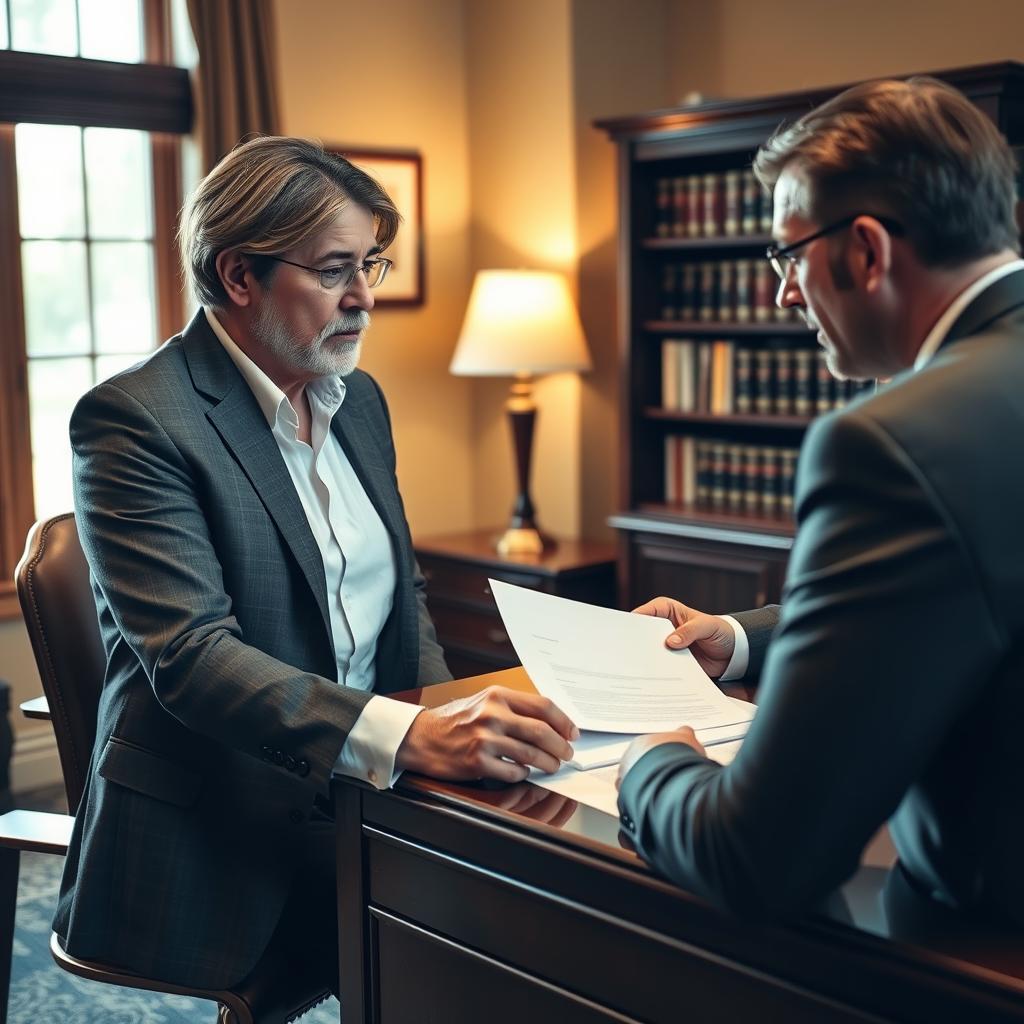
Property Settlement Lawyer Rappahannock County, VA
When a marriage ends in Rappahannock County, dividing property fairly is often the most disputed issue. Virginia law uses equitable distribution—a court divides marital assets and debts based on fairness, not necessarily a 50‑50 split. For residents of Washington, Sperryville, Flint Hill, and the surrounding rural communities, property settlement can involve family businesses, real estate, retirement accounts, and personal property that must be valued and allocated under Va. Code § 20‑107.3. Law Offices Of SRIS, P.C., founded in 1997, represents individuals in property settlement matters throughout Rappahannock County. Mr. Sris, a former prosecutor who now concentrates his practice on family law, appears with his Of Counsel in the Rappahannock County Circuit Court at 250 Gay Street, Suite 1, Washington, VA 22747. Property settlement cases are heard in that Circuit Court, while the Rappahannock County Juvenile & Domestic Relations District Court handles standalone custody, support, and protective‑order matters. Whether you are negotiating a separation agreement or litigating contested property division, our Fairfax location is ready to assist. To request a consultation about your property settlement matter, call (888) 437‑7747.
What Property Settlement Involves in Rappahannock County
Virginia is an equitable‑distribution state, not a community‑property state. Under Va. Code § 20‑107.3, the Rappahannock County Circuit Court classifies assets and debts as marital, separate, or hybrid, then divides the marital portion equitably after considering eleven statutory factors. Those factors include each spouse’s contributions to the marriage, the duration of the marriage, the ages and health of the parties, how and when specific assets were acquired, and the tax consequences of a proposed division. Separate property—generally assets owned before the marriage or received by gift or inheritance—remains with the original owner unless it has been commingled. The court does not start from a presumption of equal division; it weighs the factors to reach a result it considers fair under the specific circumstances.
In Rappahannock County, the Circuit Court is the forum for all divorce and equitable‑distribution proceedings. The court sits in Washington, Virginia, and serves the entire county, including the communities of Sperryville and Flint Hill. Because the county is rural and shares judicial resources with neighboring jurisdictions in the Twentieth Judicial District, property settlement cases may involve procedural nuances shaped by local practice. Many couples reach a negotiated resolution through a property settlement agreement—also called a separation agreement—governed by Va. Code § 20‑109. A written, signed agreement can resolve all property issues and, when combined with the required separation period, can streamline an uncontested divorce. However, when assets are complex, hidden, or disputed, a contested equitable‑distribution hearing may be unavoidable.
How Mr. Sris and His Of Counsel Approach Property Settlement Cases
Mr. Sris and his Of Counsel team handle property settlement matters by first gaining a thorough understanding of the marital estate. They identify all assets that must be addressed: real estate, bank and investment accounts, retirement plans, business interests, vehicles, and personal property. For estates involving closely held businesses, professional practices, or substantial retirement holdings, the team works with forensic accountants and business‑valuation attorneys to determine fair market value and trace the marital portion of each asset. This groundwork allows the attorneys to present a clear picture of the marital estate to the court or to the other side during negotiations.
The approach emphasizes negotiation and settlement when possible. Most property settlement cases in Rappahannock County resolve before trial through a signed separation agreement or a mediated settlement. Mr. Sris and his Of Counsel draw on their extensive experience in Virginia family law to negotiate terms that reflect the statutory factors under § 20‑107.3 and the client’s long‑term financial interests. When a settlement cannot be reached, the team is prepared to litigate the property division at the Rappahannock County Circuit Court. In every matter, the goal is to work toward a favorable resolution while providing straightforward guidance about the likely costs and uncertainties of litigation.
About Mr. Sris and His Of Counsel Team
Mr. Sris is the Owner and Founder of Law Offices Of SRIS, P.C. A former prosecutor, he has practiced family law throughout Virginia since 1997. His background gives him insight into both negotiation strategy and courtroom advocacy. Mr. Sris testified before the Virginia House Courts of Justice Committee in support of 2019 HB 635 (chief patron Del. David Bulova), a bill that ultimately revised a subsection of Virginia’s equitable‑distribution statute. He is admitted to practice in Virginia, Maryland, the District of Columbia, New Jersey, and New York. On each property settlement matter, Mr. Sris works alongside a team of dedicated Of Counsel who bring additional experience in family law, litigation, and asset valuation. Mr. Sris and his Of Counsel bring over 120 years of combined legal experience and have achieved 4,739+ documented firm-wide results. Results may vary.
Frequently Asked Questions
How is property divided in a Rappahannock County divorce?
Virginia courts divide marital property under the equitable‑distribution standard of Va. Code § 20‑107.3. The Rappahannock County Circuit Court first classifies each asset as marital, separate, or hybrid, then values the marital property and distributes it fairly according to eleven statutory factors. Separate property—assets owned before marriage or received by gift or inheritance—is generally not divided. The court’s goal is a fair outcome, not a rigid 50‑50 split. For guidance on your specific situation, reach Law Offices Of SRIS, P.C. at (888) 437‑7747.
What is a separation agreement and how does it affect property settlement?
A separation agreement, authorized by Va. Code § 20‑109, is a written contract between spouses that resolves property division, spousal support, and other divorce‑related issues. When both parties sign a comprehensive separation agreement, the agreement typically controls the property settlement, and the court will incorporate its terms into the final divorce decree if it is fair and voluntarily executed. A valid separation agreement can also satisfy the requirements for a no‑fault divorce based on a six‑month separation when no minor children are involved. To discuss whether a separation agreement is right for your situation, contact Law Offices Of SRIS, P.C. at (888) 437‑7747.
Do I need a lawyer for property settlement in Rappahannock County?
You are not legally required to hire a lawyer, but representing yourself in a property settlement can be risky, especially when significant assets, a business, or retirement accounts are involved. Virginia’s equitable‑distribution statute contains detailed classification and valuation rules, and procedural missteps can affect the final division. An attorney can help you identify all assets, evaluate settlement offers, and present your case to the Rappahannock County Circuit Court if necessary. For a consultation, reach Mr. Sris and his Of Counsel at (888) 437‑7747.
Can we divide property without going to court in Rappahannock County?
Yes. Many couples resolve property division through a negotiated separation agreement, which avoids a contested hearing. Mediation is also available and can be a productive way to reach a settlement with the help of a neutral third party. The Rappahannock County Circuit Court generally encourages settlement and will approve an agreement that is fair and properly executed. However, when the parties cannot agree, the court will decide the property division after a trial. To discuss your options for an out‑of‑court property settlement, call (888) 437‑7747.
How are business assets and retirement accounts handled in a Rappahannock County property settlement?
Business interests and retirement accounts are often the most complex assets in a divorce. The Rappahannock County Circuit Court values a business, determines whether it is marital or separate property, and divides the marital portion. This process may require a forensic accountant or business‑valuation experienced attorney. Retirement assets—including pensions, 401(k) accounts, and deferred compensation—are divided through a qualified domestic relations order (QDRO) or a similar mechanism. Mr. Sris and his Of Counsel work with financial professionals to ensure these assets are properly identified, valued, and divided in accordance with Virginia law. For a consultation, contact Law Offices Of SRIS, P.C. at (888) 437‑7747.
What happens if one spouse tries to hide assets during a Rappahannock County divorce?
Concealing marital assets is a serious issue that can lead the court to impose sanctions or award a larger share of the estate to the other spouse. In Rappahannock County, if your spouse is not forthcoming about finances, your attorney can use discovery tools—such as interrogatories, document requests, and depositions—to uncover hidden assets. Forensic accountants may also be brought in to trace funds and identify undisclosed accounts or property. The court has broad authority to consider such conduct when dividing the marital estate under the equitable‑distribution factors of Va. Code § 20‑107.3. For guidance on your specific situation, reach Law Offices Of SRIS, P.C. at (888) 437‑7747.
Related family law services in Virginia:
Fairfax County family law lawyer ·
Prince William County family law lawyer ·
Falls Church family law lawyer ·
Manassas family law lawyer
Authoritative Virginia legal resources:
Virginia Code Title 20 (Domestic Relations) |
Rappahannock County Circuit Court |
Virginia’s Judicial System
Attorney advertising. Prior results do not guarantee a similar outcome.
Case results depend on a variety of factors unique to each case.