
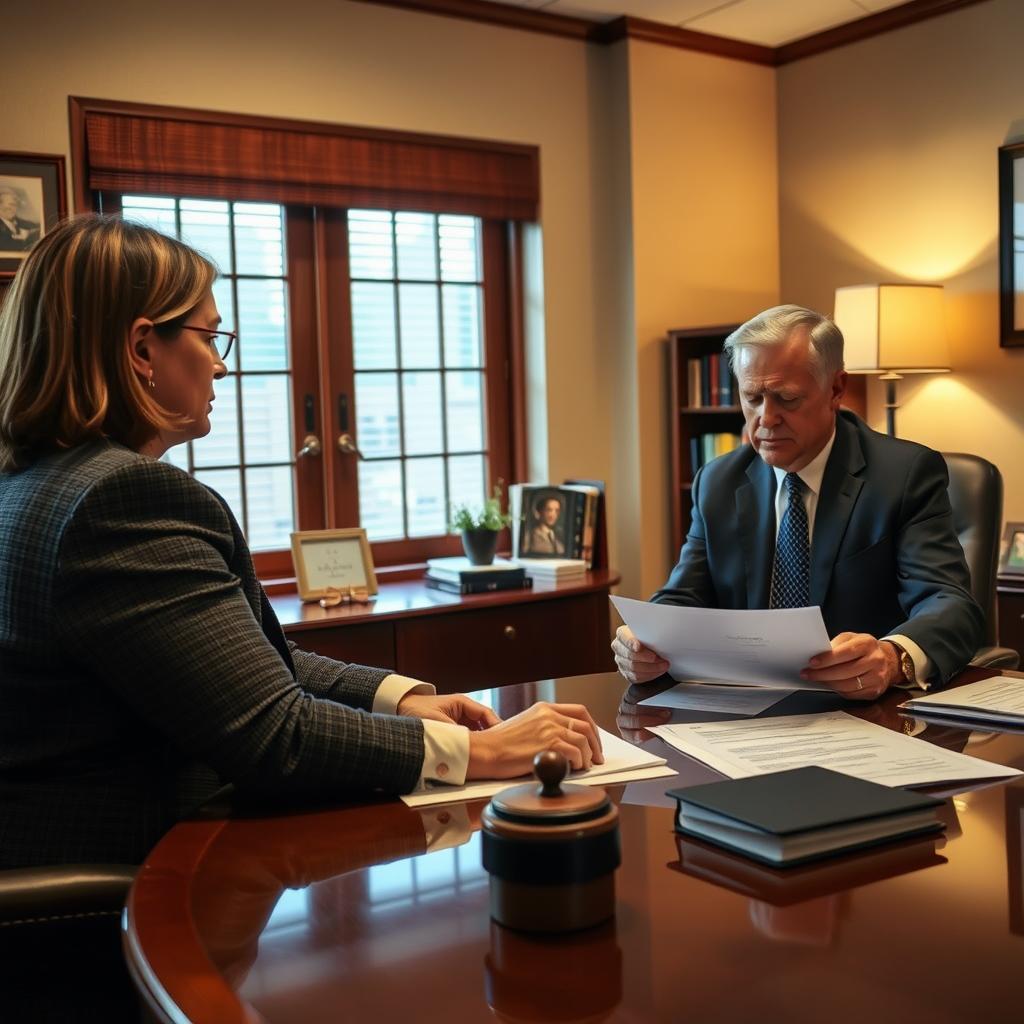
Postnup Lawyer Rappahannock County, VA
A postnuptial agreement—sometimes called a marital agreement—can provide clarity and protection for married couples in Rappahannock County, Virginia. Whether you are considering entering into a postnuptial agreement to define property rights, structure spousal support, or address other financial matters, the assistance of an experienced family law attorney is important. Law Offices Of SRIS, P.C., founded in 1997, represents clients throughout Rappahannock County in a wide range of family law matters, including postnuptial agreements. Mr. Sris, Owner and Founder of the firm, focuses on helping individuals and families in Virginia’s rural communities achieve sound legal arrangements. Our Fairfax Location at 4008 Williamsburg Court, Fairfax, Virginia 22032, serves clients in Rappahannock County and the surrounding areas, including Washington, Sperryville, Flint Hill, and beyond. To discuss your situation and learn how a postnuptial agreement can meet your needs, call (888) 437-7747.
Law Offices Of SRIS, P.C. – Advocacy Without Borders.
What Postnuptial Agreements Mean in Rappahannock County
In Virginia, postnuptial agreements are governed by the same foundational principles as premarital agreements under the Premarital Agreement Act, Va. Code § 20-147 et seq., and general contract law. These agreements allow spouses to decide how marital property, separate property, debts, and spousal support will be handled if the marriage ends, rather than relying on the default rules of equitable distribution. Because Virginia is an equitable distribution state, marital property is divided fairly—but not necessarily equally—based on the factors in Va. Code § 20-107.3. A valid postnuptial agreement can override those default rules and provide the certainty that many couples value.
For families in Rappahannock County, a postnuptial agreement can be especially meaningful. The county’s rural character means that many households own farms, timberland, small businesses, or inherited property that have been in the family for generations. When a couple later faces separation or divorce, the division of such assets can be complicated and emotionally draining. A well-drafted postnuptial agreement addresses these complexities ahead of time, reducing the risk of future disputes. Family law matters involving postnuptial agreements in Rappahannock County are typically heard in the Rappahannock County Circuit Court, located at 250 Gay Street, Suite 1, Washington, VA 22747. This court, part of Virginia’s Twentieth Judicial District, has exclusive original jurisdiction over divorce and equitable distribution, meaning any enforcement or challenge to a postnuptial agreement in connection with a divorce will proceed there. Standalone matters concerning child custody or support, if they arise, are handled by the Rappahannock County Juvenile and Domestic Relations District Court.
To be enforceable in Virginia, a postnuptial agreement must be entered into voluntarily, with full financial disclosure, and must not be unconscionable. The court will scrutinize the circumstances under which the agreement was signed and may set it aside if one spouse was coerced or misled. Because the legal standards are demanding, working with an attorney who understands Virginia family law and the local court environment helps ensure the agreement is drafted correctly and stands up to later challenge. Law Offices Of SRIS, P.C. assists clients throughout Rappahannock County in creating postnuptial agreements that are clear, fair, and tailored to each family’s circumstances.
How Mr. Sris and His Of Counsel Handle Postnuptial Agreement Cases
Mr. Sris and his Of Counsel approach each postnuptial agreement matter with a focus on clarity, thoroughness, and the protection of each client’s legal and financial interests. The process typically begins with a detailed consultation to understand the couple’s goals—whether that means safeguarding a business interest, preserving an inheritance for children from a prior relationship, or simply establishing predictable financial arrangements—and to identify any potential issues that need to be addressed.
Full financial disclosure is the cornerstone of an enforceable postnuptial agreement in Virginia. Our team works with clients to compile comprehensive asset and debt information, including real estate, retirement accounts, investment portfolios, business interests, and separate property. When the marital estate includes complex assets—such as closely held businesses, rental properties, or significant retirement plan holdings—the process may involve coordination with financial professionals who can provide valuations. Mr. Sris’s background in accounting and information systems offers a practical advantage in analyzing and structuring these financial details.
The agreement itself is then drafted to comply with Virginia law. The document must clearly state which property is separate and which is marital, how future appreciation or income from separate property will be treated, and whether spousal support is waived or limited. Every provision is written to withstand the scrutiny that a Virginia circuit court would apply if the agreement were later challenged. If the spouses are not in complete agreement, negotiation and discussion are part of the process to reach terms that both parties can accept voluntarily. Once the agreement is signed, executed with the proper formalities, and acknowledged before a notary, it becomes a binding contract. While it does not need to be filed with the court immediately, it will govern the parties’ rights in any subsequent divorce proceeding. For clients in Rappahannock County, our Fairfax Location provides a convenient base for consultations and document signing, and our attorneys appear as needed in the Rappahannock County Circuit Court.
About Mr. Sris and His Of Counsel Team
Mr. Sris, Owner and Founder of Law Offices Of SRIS, P.C., is admitted to practice in Virginia, Maryland, the District of Columbia, New Jersey, and New York. Practicing since 1997, Mr. Sris has extensive experience in Virginia family law, including postnuptial agreements and equitable distribution matters. A former prosecutor, he brings a unique perspective to legal advocacy—a perspective grounded in thorough preparation, attention to detail, and a commitment to achieving favorable outcomes for clients. Mr. Sris testified before the Virginia House Courts of Justice Committee in support of 2019 HB 635 (chief patron Del. David Bulova), reflecting his in-depth familiarity with Virginia’s domestic relations statutes.
Mr. Sris and his Of Counsel bring over 120 years of combined legal experience and have achieved over 4,739+ documented firm-wide results. Results may vary. The Of Counsel attorneys who assist with family law matters each bring their own strengths—whether developed through prior prosecutorial or law enforcement experience, federal litigation, or academic research—and all work under Mr. Sris’s direction to provide comprehensive, client-focused representation. Collectively, the team helps clients in Rappahannock County and across Virginia navigate the legal system with confidence. Reach our Fairfax Location at (888) 437-7747 to schedule a consultation.
Frequently Asked Questions
What is a postnuptial agreement in Virginia?
A postnuptial agreement is a contract between spouses that governs property division, debt allocation, spousal support, and other financial matters in the event of divorce or death. In Virginia, postnuptial agreements are enforceable under the same legal principles that apply to premarital agreements, set forth in Va. Code § 20-147 et seq., provided they are entered into voluntarily, with full disclosure of assets and liabilities, and are not unconscionable. They allow couples to tailor financial outcomes to their specific circumstances rather than relying on the default equitable distribution rules.
How is a postnuptial agreement enforced in Rappahannock County?
Enforcement of a postnuptial agreement typically arises in the context of a divorce filed in the Rappahannock County Circuit Court. The court will examine whether the agreement was executed with full financial disclosure, without duress or fraud, and whether its terms are conscionable. If the agreement meets these requirements, the court will generally uphold its provisions, dividing property and determining support according to the agreement rather than under Va. Code § 20-107.3. Challenges alleging coercion or inadequate disclosure are resolved through evidentiary hearings before the circuit judge.
Can a postnuptial agreement cover child custody or support?
In Virginia, postnuptial agreements may address property division and spousal support, but provisions regarding child custody, visitation, and child support are always subject to court review based on the best interests of the child. The Rappahannock County Juvenile and Domestic Relations District Court, or the Circuit Court in a divorce proceeding, will make custody and support determinations using the statutory factors in Va. Code § 20-124.3 and the child support guidelines in Va. Code § 20-108.1, regardless of what the postnuptial agreement says. An agreement that includes child-related terms may be considered as one factor, but it is never binding on the court.
Do I need a lawyer for a postnuptial agreement in Rappahannock County?
Virginia law does not require you to have a lawyer to enter into a postnuptial agreement, but having an experienced attorney is strongly advisable. The enforceability of a postnuptial agreement depends heavily on the procedural and substantive fairness of the process. An attorney can help ensure that all assets and debts are accurately identified and valued, that the agreement complies with Virginia’s legal standards, and that your rights are protected. Without legal guidance, an agreement may later be found unenforceable, leaving the parties to litigate property division and support under the default equitable distribution framework.
What happens if we divorce without a postnuptial agreement?
Without a postnuptial agreement, the division of marital property and the determination of spousal support in a Rappahannock County divorce will be governed by Virginia’s equitable distribution statute, Va. Code § 20-107.3. The court will classify property as marital, separate, or hybrid; value the marital estate; and then distribute it based on the eleven statutory factors. This process can involve extensive discovery, expert testimony, and court hearings. A postnuptial agreement allows couples to avoid that uncertainty by deciding in advance how their property and finances will be handled.
How does the Rappahannock County Circuit Court handle disputes over postnuptial agreements?
When a postnuptial agreement is challenged during a divorce proceeding, the Rappahannock County Circuit Court will hold a separate evidentiary hearing to determine the agreement’s validity. The court examines the circumstances of execution—whether both parties had the opportunity to consult counsel, whether financial disclosures were complete, and whether any evidence of coercion exists. If the court finds the agreement valid, it will incorporate its terms into the final divorce decree. If not, the court proceeds to divide property and determine support under the default equitable distribution rules in Va. Code § 20-107.3.
Related family law locations:
Family lawyer Fairfax County ·
Family lawyer Fairfax City ·
Family lawyer Falls Church ·
Family lawyer Prince William County ·
Family lawyer Manassas
Virginia primary sources:
Virginia Code Title 20 (Domestic Relations) ·
Rappahannock County Courts
Attorney advertising. Prior results do not guarantee a similar outcome. Results may vary.
Case results depend on a variety of factors unique to each case.