
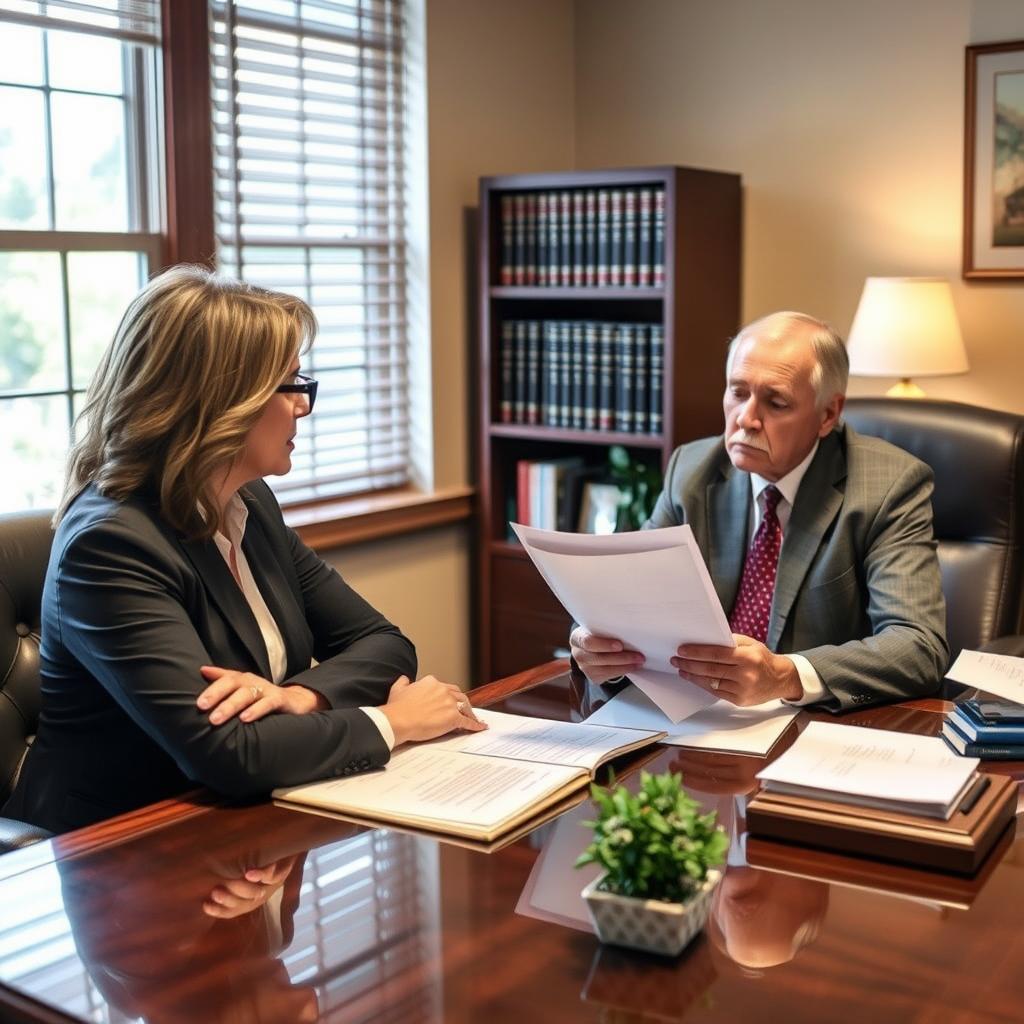
Divorce Decree Modification Lawyer Fauquier County, VA
You finalized your divorce years ago, but circumstances have shifted—an income change, relocation, or evolving needs of your children now make the original decree unworkable. Whether it’s a spousal‑support obligation you can no longer sustain or a custody plan that no longer fits, modifying a divorce order in Fauquier County requires showing a material change in circumstances to the court. At Law Offices Of SRIS, P.C., Mr. Sris and his Of Counsel team work to present your changed situation clearly, focusing on the practical factors Virginia judges weigh. For a confidential discussion of your modification matter, reach our firm at (888) 437‑7747. Law Offices Of SRIS, P.C. — Advocacy Without Borders.
Strategy Options for Divorce Decree Modification in Fauquier County
Your approach depends on what part of the decree you need changed and how cooperative your former spouse is. In many cases, both parties can agree to a proposed modification and submit a signed consent order to the Fauquier County Circuit Court—the court that retains jurisdiction over the original divorce. When agreement isn’t possible, you file a motion to modify with the same court, along with a detailed affidavit explaining the changed circumstances. Negotiation and mediation are available before a hearing, and Mr. Sris and his Of Counsel can help you evaluate whether a negotiated resolution is feasible.
For custody or visitation modifications, the Fauquier County Juvenile and Domestic Relations District Court may also be involved. The team’s role is to guide you through the procedural rules, help you gather supporting evidence—financial records, pay stubs, school reports, or testimony from other witnesses—and present a straightforward case for why the adjustment serves the best interests of the child or achieves fairness under Virginia’s equitable distribution principles.
What to Expect When You Request a Modification
After a motion is filed, the other party has an opportunity to respond. The court may schedule a pendente lite hearing to address immediate issues—like temporary support—while the case moves forward. Discovery, including requests for financial documents and interrogatories, often follows. The timeline varies based on the court’s calendar and the complexity of the dispute; uncontested agreed modifications can be resolved relatively quickly, while contested matters that require an evidentiary hearing take longer.
Throughout the process, Mr. Sris and his Of Counsel keep you informed, explain what the judge is likely to consider under Va. Code § 20‑91 (divorce grounds), § 20‑107.3 (equitable distribution factors), § 20‑107.1 (spousal‑support factors), and § 20‑124.3 (child‑custody factors), and prepare you for what the hearing may require—including the possibility of a corroborating witness if an evidentiary hearing is necessary. The team’s familiarity with how these courts operate helps set realistic expectations about timing and likely outcomes.
The Legal Standard for Modification in Virginia
Virginia courts do not rewrite divorce decrees simply because one party is unhappy with the original terms. For spousal support, you must demonstrate a material change in circumstances that was not contemplated at the time of the last order—such as a significant increase or decrease in income, job loss, illness, or retirement. Child‑support modifications are governed by Va. Code § 20‑108.1 guidelines, which automatically permit a review when three years have passed or when income changes by a specified amount. Custody and visitation modifications require showing that a material change has occurred and that the proposed change is in the child’s best interests under the ten factors in § 20‑124.3.
The court may also consider whether a party is deliberately underemployed or has voluntarily reduced income to avoid an obligation. If the modification is sought in bad faith, the court can deny the request and may award attorney’s fees to the other side. Presenting a well‑documented, good‑faith petition is essential; Mr. Sris and his Of Counsel focus on assembling the evidence needed to meet the applicable standard without overpromising what the court might do.
Attorney Credentials
The modification effort benefits from an attorney who understands both the statutory framework and the local court dynamics. Mr. Sris, Owner and Founder of Law Offices Of SRIS, P.C., has practiced family law, among other areas, since 1997. He is admitted in Virginia, Maryland, the District of Columbia, New Jersey, and New York. As a former prosecutor, he brings extensive courtroom experience to the negotiation table and to motion practice. In addition, Mr. Sris testified before the Virginia House Courts of Justice Committee in support of 2019 HB 635 (chief patron Del. David Bulova), legislation that revised Virginia’s equitable‑distribution statute.
Mr. Sris leads a team of Of Counsel attorneys who collectively bring over 120 years of combined legal experience and have achieved over 4,739 documented firm-wide results. Results may vary. The group regularly handles modification matters throughout Fauquier County, appearing at the Fauquier County Circuit Court and the Juvenile and Domestic Relations District Court at 6 Court Street, Warrenton, VA 20186. The firm’s location is at 4008 Williamsburg Court, Fairfax, VA 22032. By appointment only. Call (888) 437‑7747 to schedule a consultation.
Frequently Asked Questions
What parts of a Virginia divorce decree can be modified?
Spousal support, child support, and custody/visitation provisions can be modified if there has been a material change in circumstances. Property‑division orders are generally final and cannot be modified, although enforcement of a property award is possible. The specific statute governing each type determines the required showing.
How do I prove a “material change in circumstances”?
You present evidence—income documentation, medical records, employment records, school reports, or testimony—that shows the change is significant, not temporary, and was not anticipated when the last order was entered. The judge evaluates whether the change makes the existing decree no longer appropriate. Your attorney can help identify the most persuasive evidence for your situation.
Do I need to go back to court to modify a divorce decree?
Yes. Even if both parties agree, the modification must be approved by the court that issued the original decree. A written consent order signed by both parties is often the quickest path. If you cannot agree, a contested motion and hearing are necessary. Having an attorney present the agreed‑upon terms or argue your motion can help streamline the process.
Can spousal support be terminated if I lose my job?
A job loss that substantially reduces your income may justify a modification or termination of spousal support, but the court will look at the circumstances, including your efforts to find new employment. If the loss is temporary, the court may suspend support rather than terminate it. The judge’s focus is on whether the change is material and lasting.
Will my child‑support obligation automatically adjust after three years?
Not automatically. Virginia law permits a party to request a review of child support after three years without having to prove a material change, but you still must file a motion. The court will then recalculate support under the guidelines based on current incomes. If the new amount differs significantly from the existing order, a modification can be granted.
What if my former spouse refuses to comply with the existing decree?
That is an enforcement matter, not a modification, but it can be addressed in the same court. If a party is not paying support or following visitation orders, you can file a rule to show cause to ask the court to compel compliance. Mr. Sris and his Of Counsel handle both enforcement actions and modification requests; often the two issues arise together.
Is mediation required before asking the court to change a decree?
Virginia does not mandate mediation for modification cases, but many judges appreciate seeing that the parties attempted to reach an agreement. Mediation can be a cost‑effective way to resolve disputes without a hearing. Your attorney can advise whether mediation is appropriate in your case and may be able to settle the matter without protracted litigation.
How long does a modification take in Fauquier County?
Uncontested agreed modifications can be finalized relatively quickly after filing. Contested motions that require an evidentiary hearing take longer, depending on the court’s schedule and the amount of discovery needed. Mr. Sris and his Of Counsel handle the procedural steps efficiently to keep your case moving forward. Contact the firm at (888) 437‑7747 to discuss the specifics of your situation.
Request a Consultation
If a divorce decree is no longer working for you, you need an attorney who can navigate the modification process in Fauquier County. Mr. Sris and his Of Counsel team are available to review your circumstances and explain what the court will need to see. Call (888) 437‑7747 or reach us through the contact page to schedule a confidential appointment. No walk‑ins; consultations are by appointment only.
For a full statutory breakdown of Virginia divorce and modification law, see our comprehensive analysis.
Fairfax Location
Law Offices Of SRIS, P.C.
4008 Williamsburg Court
Fairfax, VA 22032
(703) 636‑5417
Toll‑free: (888) 437‑7747
By appointment only. Free parking.
Attorney advertising. Prior results do not guarantee a similar outcome. Case results depend on a variety of factors unique to each case. Results may vary.