
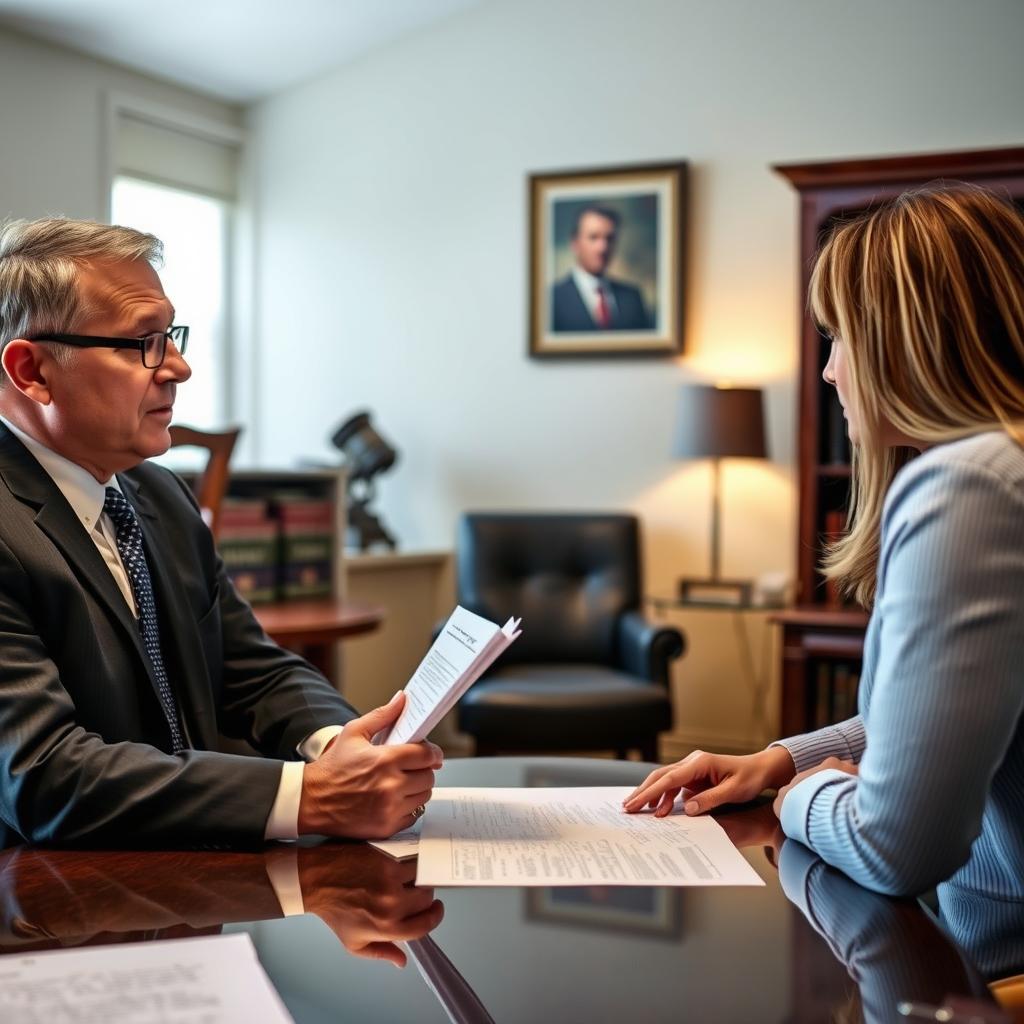
Felony Conviction Divorce Lawyer Goochland County
A felony conviction complicates every aspect of a divorce in Goochland County. You need a lawyer who understands both family law and criminal law implications. Law Offices Of SRIS, P.C.—Advocacy Without Borders. provides that dual focus. Our attorneys handle custody, property division, and support issues impacted by a criminal record. (Confirmed by SRIS, P.C.)
Statutory Definition of Divorce Grounds in Virginia
Virginia Code § 20-91 outlines the fault and no-fault grounds for divorce, with a felony conviction being a specific fault ground under subsection (3). A felony conviction is a Class 6 Felony or higher under Virginia law that results in a prison sentence of one year or more. This statutory ground can directly impact the court’s decisions on spousal support, property division, and child custody. The classification of the crime matters less than the fact of a final conviction and imprisonment.
Using a felony as grounds for divorce requires proof of the final conviction and a sentence of confinement for more than one year. The statute does not require the incarcerated spouse to be currently in prison. A completed sentence is sufficient if the other statutory requirements are met. This ground is distinct from cruelty or desertion. It provides a clear, often uncontestable, basis for ending the marriage. The petitioning spouse must still address all ancillary matters like debt and asset division.
Virginia is an equitable distribution state. This means the court divides marital property fairly, not necessarily equally. A felony conviction can be a factor the court considers when determining what is fair. The conduct of a spouse, including criminal activity that dissipated marital assets, can affect the final distribution. Judges in Goochland County have broad discretion in these matters. Having a lawyer who can argue how the conviction should or should not influence the division is critical.
How does a felony affect child custody in Virginia?
A felony conviction is a primary factor in determining the best interests of the child under Virginia Code § 20-124.3. The court must consider the felony’s nature, its relation to parental fitness, and the time since the offense. Violent felonies or crimes against children create a high risk of supervised visitation or loss of custody. The court’s primary concern is always the child’s safety and welfare. A Goochland County judge will scrutinize any criminal history closely.
Can I get spousal support if my spouse has a felony?
A paying spouse’s felony conviction can reduce or eliminate their obligation to pay spousal support under Virginia law. The court considers the conviction’s impact on the offender’s earning capacity and financial resources. If incarceration or a criminal record limits income, support awards may be adjusted. Conversely, a recipient spouse’s felony may bar them from receiving support if the crime affected the marriage’s economic stability. Each case turns on specific financial evidence presented to the court.
What is the difference between a misdemeanor and felony in divorce?
A misdemeanor is not a specific statutory ground for divorce in Virginia, while a felony conviction is. Misdemeanors may still be relevant to custody or support decisions as evidence of character. Felonies carry more weight due to their severity and the resulting lengthy incarceration. The distinction is crucial for establishing grounds and arguing related issues. A Goochland County divorce lawyer must know how to frame each type of offense.
The Insider Procedural Edge in Goochland County
The Goochland County Circuit Court is located at 2938 River Road West, Goochland, VA 23063. All divorce cases, especially those involving felony convictions, are filed here. The court handles the dissolution of marriage, equitable distribution, and all related orders. Knowing the local rules and judicial preferences is a significant advantage. Procedural missteps can delay your case or weaken your position on critical issues.
The standard filing fee for a divorce complaint in Goochland County is set by state law. Additional fees apply for serving the incarcerated spouse and for scheduling hearings. The timeline from filing to final decree varies based on case complexity and grounds. A no-fault divorce requires a one-year separation. A fault-based divorce using felony grounds can potentially proceed faster, as no separation period is mandated. An experienced lawyer manages these deadlines and costs effectively.
Local procedural facts specific to Goochland County influence case strategy. The court expects precise documentation of the felony conviction, including certified copies of sentencing orders. Judges here pay close attention to how criminal conduct impacted the family home and finances. Coordination with the Department of Corrections may be necessary for serving papers or arranging participation. A Virginia family law attorney familiar with this locality handles these requirements.
What is the typical timeline for a divorce with a felony in Goochland?
A contested divorce involving a felony conviction in Goochland County can take nine to eighteen months to resolve. The timeline depends on the complexity of asset division and custody disputes. Gathering evidence related to the felony’s impact adds time to the discovery phase. Court docket availability also affects scheduling. An uncontested case based on felony grounds may conclude more quickly if all issues are agreed upon.
How are court documents served to an incarcerated spouse?
Service on an incarcerated spouse is completed through the facility’s designated agent for legal process. The Goochland County Sheriff’s Location or a private process server can effect service at a Virginia correctional facility. Proof of service must be filed with the Circuit Court clerk. Failure to properly serve the incarcerated spouse halts the divorce proceeding. Your lawyer ensures all service requirements are met to avoid delays.
Penalties & Defense Strategies in Divorce Proceedings
The most common penalty in a divorce context is the loss of custodial time and decision-making authority for the parent with a felony. The court’s orders directly impact your parental rights and financial future. A felony conviction does not automatically decide every issue, but it heavily influences the judge. Strategic defense focuses on mitigating this influence and protecting your remaining rights. The table below outlines potential consequences.
| Offense Context | Potential Penalty in Divorce | Notes |
|---|---|---|
| Felony Grounds for Divorce | Faster divorce decree against you; possible bar to spousal support. | No mandatory separation period required for petitioner. |
| Child Custody Determination | Supervised visitation; limited overnight stays; loss of legal custody. | Best interests of child standard under VA Code § 20-124.3. |
| Property Division (Equitable Distribution) | Adverse distribution if felony wasted marital assets. | Court may award a larger share to innocent spouse. |
| Spousal Support Award | Reduced or denied support due to impaired earning capacity from record. | VA Code § 20-107.1 factors include circumstances of the parties. |
[Insider Insight] Goochland County prosecutors in related criminal matters and family court judges take a dim view of felonies involving domestic violence or financial fraud. These crimes are seen as direct attacks on the family unit. For other felony types, the court may be more focused on rehabilitation and current conduct. Presenting evidence of post-conviction stability, employment, and counseling is critical. A lawyer must frame the narrative around your present fitness, not just past mistakes.
Defense strategies require a dual approach. First, address the divorce itself by negotiating settlements on property and support to avoid a judge’s discretionary ruling. Second, proactively build a case for parental fitness through character witnesses, psychological evaluations, and stable housing proof. In some cases, challenging the relevance of an old conviction is possible. The goal is to compartmentalize the criminal past from current parental and financial responsibilities. Effective criminal defense representation knowledge is invaluable here.
Can a felony conviction cause me to lose my house in the divorce?
A felony conviction can affect the equitable distribution of your house if marital funds were used for legal defense or fines. The court may award the innocent spouse a larger share of the equity as compensation. If the crime created a danger in the home, the judge could order exclusive use to the other spouse. The outcome depends on the felony’s direct connection to the marital asset. Your lawyer argues to limit this financial penalty.
How do I protect my visitation rights with a felony?
Protecting visitation rights requires demonstrating that the felony does not pose a current risk to the children. Propose a detailed, graduated visitation plan starting with supervised visits. Complete any court-ordered rehabilitation programs. Provide evidence of stable employment and housing. The key is showing the judge a concrete plan for safe, meaningful parent-child contact. A lawyer advocates for this structured approach.
Why Hire SRIS, P.C. for Your Goochland County Divorce
Bryan Block, a former Virginia State Trooper, leads our family law defense team in Goochland County. His law enforcement background provides unique insight into how courts view criminal history in family cases. He knows what evidence prosecutors and judges find credible. This perspective is invaluable for clients with a felony conviction seeking to protect their rights in divorce. He builds defense strategies that address both legal arenas.
Bryan Block
Former Virginia State Trooper
Focus: Family Law & Criminal Law Intersection
Virginia State Bar Member
Handled numerous contested divorases involving criminal records in Central Virginia.
SRIS, P.C. has achieved results for clients facing complex divorases in Goochland County. Our team understands the local judicial temperament and procedural nuances. We do not treat your divorce and criminal record as separate issues. We develop a unified legal strategy that addresses both. Our approach is direct and focused on achieving the best possible outcome under difficult circumstances. We provide experienced legal team support for every step.
The firm’s structure supports clients across multiple legal challenges. Our attorneys communicate clearly about risks and realistic goals. We prepare cases thoroughly for negotiation or trial. In Goochland County, where cases are highly fact-specific, this preparation makes a difference. We advocate aggressively to protect your parental rights and financial stability. Your case is managed with the precision it demands.
Localized FAQs for Goochland County
What court handles divorce with a felony in Goochland County?
The Goochland County Circuit Court handles all divorce cases, including those based on felony conviction grounds. The address is 2938 River Road West. All filings and hearings occur at this location.
Can a felony prevent me from getting custody in Virginia?
Yes, a felony can prevent you from getting custody. Virginia law requires the court to consider any felony conviction when determining the child’s best interests. Violent or child-related crimes pose the highest risk.
How long does a divorce take after a felony conviction?
A contested divorce involving a felony can take 9 to 18 months in Goochland County. An uncontested case may conclude faster. The complexity of related issues dictates the timeline.
Will I have to pay more support because of my felony?
Not necessarily. Your felony may reduce your earning capacity, which could lower support obligations. The court examines your current income and ability to pay, not just the past conviction.
Do I need a different lawyer for my divorce and criminal case?
Not always. A firm like SRIS, P.C. with experience in both areas can often handle the interrelated issues. Coordinated defense across both matters is often more effective.
Proximity, CTA & Disclaimer
Our Goochland County Location is strategically positioned to serve clients throughout the region. We are accessible from areas like Manakin-Sabot, Oilville, and Crozier. The Goochland County Courthouse is the central venue for your divorce proceedings. Consultation by appointment. Call 24/7. Our team is ready to discuss your case involving a felony conviction and divorce.
Law Offices Of SRIS, P.C. —Advocacy Without Borders.
Phone: [PHONE NUMBER FROM GMB]
Address: [GOOCHLAND COUNTY GMB ADDRESS]
Past results do not predict future outcomes.