
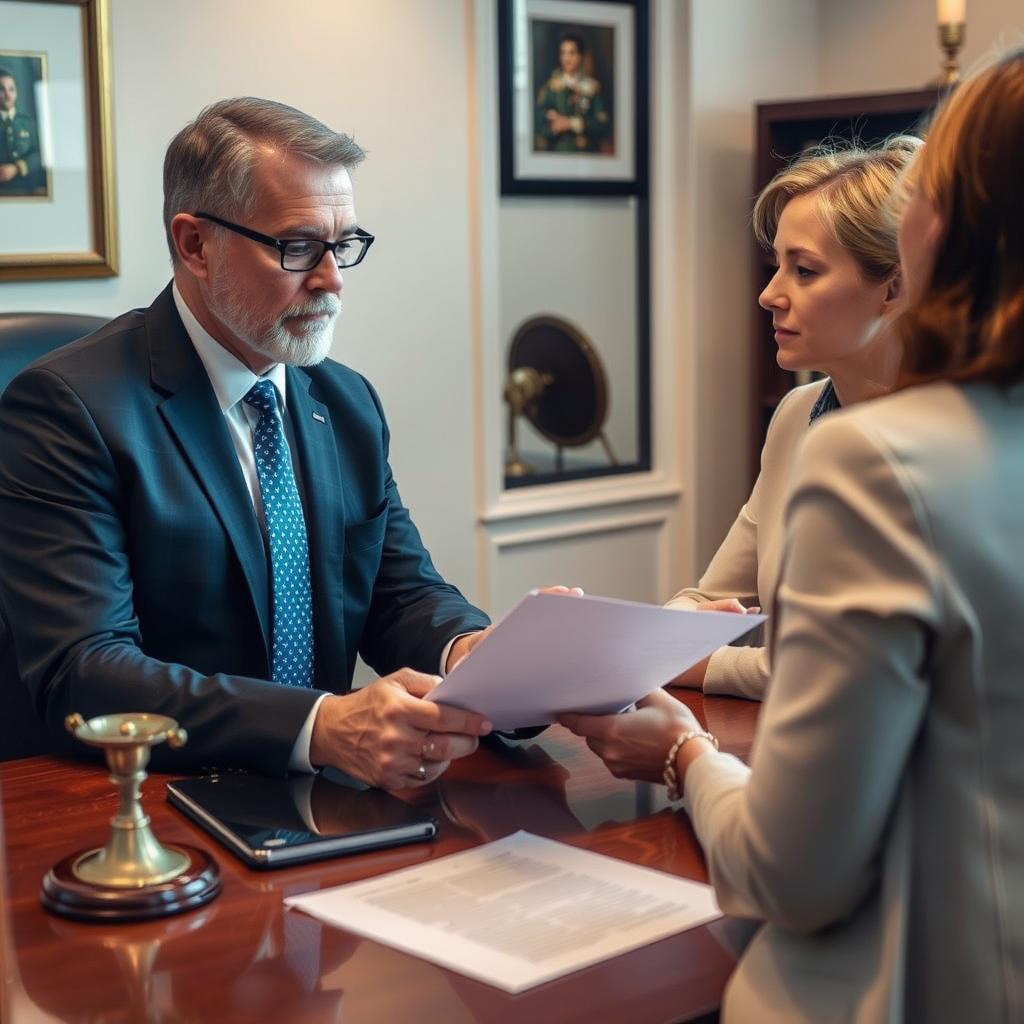
Norfolk Military Divorce Lawyer Falls Church
You need a Norfolk Military Divorce Lawyer Falls Church for a service member divorce in Falls Church, Virginia. Military divorces involve federal laws like the Servicemembers Civil Relief Act and state laws on residency and asset division. Law Offices Of SRIS, P.C. —Advocacy Without Borders. Our Falls Church Location handles the specific legal requirements for active-duty personnel and their spouses. We address jurisdictional issues, pension division, and child custody across state lines. (Confirmed by SRIS, P.C.)
Statutory Definition of Military Divorce in Virginia
Virginia military divorce law is governed by state statutes and federal acts, primarily Va. Code § 20-97 and the federal Uniformed Services Former Spouses’ Protection Act. The legal classification is a civil dissolution of marriage with specific provisions for service members. The maximum penalty is not applicable, as divorce is a civil proceeding, but financial and custodial outcomes are binding. The core legal framework for a military divorce in Falls Church integrates Virginia’s divorce statutes with federal protections for service members. Virginia law establishes the grounds and procedures, while federal law dictates how military benefits are treated. A Norfolk Military Divorce Lawyer Falls Church must handle both systems. Jurisdiction is a primary hurdle. Va. Code § 20-97 outlines residency requirements for filing. For service members, Virginia can be a “home state” for divorce purposes even during deployments. This depends on maintaining legal domicile in the Commonwealth. The federal Servicemembers Civil Relief Act (SCRA) provides procedural safeguards. It can postpone court proceedings if military duty materially affects a service member’s ability to appear. This is not an automatic stay but a powerful protection your lawyer must assert. Asset division follows Virginia’s equitable distribution principles under Va. Code § 20-107.3. Military pensions are considered marital property subject to division. The USFSPA is the federal law that permits state courts to treat disposable retired pay as property. Direct payments from the Defense Finance and Accounting Service require a marriage of ten years overlapping ten years of service. Child support and custody are decided under Virginia law, but the military’s Family Support Program can enforce orders.
How is residency established for a service member filing in Falls Church?
A service member can establish residency in Virginia for divorce by demonstrating domicile intent. Physical presence is not strictly required if Virginia is the intended permanent home. Military orders assigning the member to a duty station in Virginia strongly support residency. Filing a Virginia state income tax return or maintaining a Virginia driver’s license also proves domicile. A Norfolk Military Divorce Lawyer Falls Church gathers this evidence to satisfy the court.
What is the “10/10 Rule” for military pension division?
The “10/10 Rule” governs direct payment of military pension shares by the DFAS. It requires at least ten years of marriage overlapping ten years of creditable military service. If this rule is met, DFAS can pay the former spouse’s share directly. If not met, the court order is still valid and enforceable, but payment must come from the retiree. Your lawyer will structure the order to ensure compliance with federal law.
How does the SCRA affect divorce timelines in Falls Church?
The Servicemembers Civil Relief Act can significantly delay divorce proceedings upon proper application. A service member facing deployment or demanding duty can request a stay of at least 90 days. The court may grant additional extensions if military necessity continues. This protects the service member’s due process rights. Your attorney files the necessary affidavits and military orders to secure this protection.
The Insider Procedural Edge in Falls Church
The Falls Church Circuit Court at 300 Park Avenue, Falls Church, VA 22046 handles all divorce cases. This court manages the specific filing procedures and local rules for military divorce actions. Procedural facts include specific filing hours and mandatory financial disclosure forms. The timeline from filing to final hearing varies based on case complexity and grounds. Filing fees are set by the Virginia Supreme Court and are subject to change. The Clerk of the Circuit Court for the City of Falls Church processes divorce complaints. You file the initial Complaint for Divorce and other pleadings at this location. The court requires specific supplemental documents for military cases. These often include a Military Affidavit detailing the service member’s status and potential SCRA implications. Local rules may also require a proposed separation agreement or parenting plan at filing. The court’s temperament expects precise adherence to procedural rules. Judges here are familiar with the challenges introduced by military service. They expect clear documentation of residency and jurisdiction. They also expect motions related to the SCRA to be filed promptly and correctly. Failure to follow local practice can cause unnecessary delays. The timeline for an uncontested military divorce can be as short as a few months if residency is clear and agreements are in place. Contested cases, especially those involving pension valuation or interstate custody, take longer. The court’s docket schedule also affects the speed. Your attorney’s knowledge of the court’s scheduling practices is critical. Filing fees are a required cost to initiate the case. Procedural specifics for Falls Church are reviewed during a Consultation by appointment at our Falls Church Location.
What are the local filing requirements for a military divorce?
Local filing requires the state-mandated forms plus a Military Affidavit (VS-4 form). The affidavit verifies the service member’s active duty status and address for service of process. The court may also require a proposed Qualified Domestic Relations Order for pension division at the outset. All financial disclosure statements must be complete and filed with the initial complaint. An experienced lawyer ensures all local forms are correctly completed.
How long does a contested military divorce take in this court?
A contested military divorce in Falls Church Circuit Court typically takes nine to eighteen months. The timeline depends on discovery disputes, pension valuation reports, and custody evaluations. Court hearing dates are scheduled based on the judge’s availability and case complexity. Motions for continuances under the SCRA can add additional months to the process. Strategic legal planning from the start can help manage this timeline.
Penalties & Defense Strategies in Military Divorce
The most common penalty range in a divorce is financial, involving asset division, support obligations, and legal costs. While divorce does not carry criminal penalties, the court’s orders have the force of law. Failure to comply can result in contempt findings, wage garnishment, or liens. For service members, non-compliance can also trigger military command involvement. A strategic defense focuses on protecting your financial and parental rights.
| Offense / Issue | Penalty / Consequence | Notes |
|---|---|---|
| Failure to Pay Court-Ordered Support | Contempt of Court, Wage Garnishment, Liens, Interest on Arrears | For service members, DFAS can enforce via direct allotment. Command may be notified. |
| Violation of Child Custody Order | Contempt, Modification of Custody, Make-Up Parenting Time, Fines | Military relocation orders require a modified parenting plan. Failure to file can be a violation. |
| Improper Division of Military Pension | QDRO Rejection by DFAS, Loss of Direct Payment, Enforcement Action | The order must precisely follow USFSPA and DFAS formatting rules to be enforceable. |
| Default Judgment Due to SCRA Waiver | Loss of right to contest property, support, and custody terms. | Occurs if a service member fails to respond and did not properly invoke SCRA protections. |
[Insider Insight] Local prosecutors are not involved in divorce, but the Falls Church Circuit Court judges expect full financial transparency. They tend to enforce support orders strictly and scrutinize relocation requests that affect custody. For military pensions, they require precise QDROs. The court is accustomed to dealing with the challenges of military life but holds parties to their legal obligations. A strong defense strategy involves proactive motion practice. Your attorney must immediately address jurisdictional challenges. They must file for SCRA stays if deployment is imminent. They must secure accurate valuations of the military pension using a certified actuary if necessary. Negotiating a thorough separation agreement often provides more certainty than a court trial. This agreement should detail all terms, from pension division to child relocation procedures. It must be drafted to comply with both Virginia law and military regulations. This prevents future enforcement problems.
What are the financial consequences of a divorce for a service member?
The financial consequences include division of marital property, including pension accrual during marriage. The service member may be ordered to pay spousal support, child support, or both. They are responsible for their own attorney’s fees and may be ordered to pay a portion of the spouse’s fees. The division of military benefits, like SBP elections, has long-term financial impact. A lawyer negotiates to protect your long-term financial security.
How can a service member protect parental rights during a PCS move?
A service member can protect parental rights during a Permanent Change of Station by seeking a modified custody order. Virginia law requires court approval for relocating a child. The service member must file a petition detailing the move’s necessity and a proposed new parenting plan. The court will consider the child’s best interests and the military necessity of the orders. Legal action must begin well before the move date.
Why Hire SRIS, P.C. for Your Falls Church Military Divorce
Our lead attorney for military family law is a seasoned litigator with direct experience in Falls Church Circuit Court. This attorney understands the intersection of Virginia divorce law and military regulations. SRIS, P.C. has achieved favorable results for service members and their families in Northern Virginia. Our firm differentiators include a team approach and familiarity with the local legal area. We provide direct, strategic counsel focused on efficient resolutions.
Primary Attorney: Our military divorce team includes attorneys with backgrounds in family law and an understanding of military culture. They have represented numerous active-duty clients from all service branches. Their credentials include extensive litigation experience in Virginia circuit courts. They focus on protecting service members’ pensions, custody rights, and careers during divorce proceedings. They know how to present a case to a Falls Church judge.
Our firm’s approach is built on preparation and clarity. We start by thoroughly documenting your military service and marital assets. We identify jurisdictional issues immediately. We coordinate with financial experienced attorneys to value military pensions and other benefits accurately. We draft court orders, like QDROs and separation agreements, to meet strict legal standards. This prevents future enforcement issues with DFAS or the Virginia courts. We also understand the personal stress of divorce during military service. Our team provides clear communication about your options and the likely outcomes. We aim to resolve matters through negotiation when possible. We are prepared for trial when necessary. Our goal is to secure a stable post-divorce future for you and your family. Your career and your parental rights are our priority. Consult with our experienced Virginia family law attorneys to discuss your case.
Localized FAQs for Military Divorce in Falls Church
Can I file for divorce in Falls Church if my spouse is deployed?
Yes, you can file, but the Servicemembers Civil Relief Act may delay proceedings. The court must ensure the deployed spouse has proper notice and an opportunity to participate. Your lawyer must follow specific service of process rules for deployed personnel. The case may be stayed until the service member can respond.
How is my military pension divided in a Virginia divorce?
Your military pension is marital property for the portion earned during the marriage. Virginia courts divide this “marital share” under equitable distribution principles. A court order called a Qualified Domestic Relations Order (QDRO) is required for direct DFAS payment. The division percentage is determined by the court or your settlement agreement.
What happens to child custody if I receive PCS orders?
You must petition the Falls Church Circuit Court to modify the custody order. The court will review the move’s necessity and the proposed new parenting plan. Military orders are a strong factor, but the child’s best interests control the final decision. A modified order must be in place before you relocate with the child.
Do I have to be a Virginia resident to file for divorce here?
At least one party must be a bona fide resident of Virginia for at least six months before filing. For service members, demonstrating “domicile” in Virginia is key, which can be shown through intent, tax filings, and voter registration. Physical presence for six consecutive months is not an absolute requirement if domicile is proven.
Can my spouse get a share of my VA disability pay?
Federal law prohibits VA disability pay from being divided as marital property in a divorce. However, the court can consider the amount of disability pay when calculating spousal support obligations. The disability pay may effectively offset other income available for support. An attorney can explain how this affects your specific financial picture.
Proximity, CTA & Disclaimer
Our Falls Church Location serves clients in the City of Falls Church and surrounding Northern Virginia communities. We are accessible to military personnel from Joint Base Myer-Henderson Hall, the Pentagon, and other local installations. Consultation by appointment. Call 703-636-5417. 24/7. Our legal team is ready to discuss your military divorce case. We provide criminal defense representation and other services, but for family law matters, our focus is on your specific needs. For support from our experienced legal team, contact us to schedule a case review. The NAP for our firm is: SRIS, P.C., Consultation by appointment, 703-636-5417. Procedural specifics for Falls Church are reviewed during a Consultation by appointment at our Falls Church Location.
Past results do not predict future outcomes.